I always thought I knew what spiders were.
Until I met Finn Tan.
Then I realised I didn’t know spiders at all.
Finn is an entomology enthusiast who lives and breathes insects. A final year student of Environmental and Marine Science at Republic Polytechnic graduating in May this year, his current obsession is spiders.
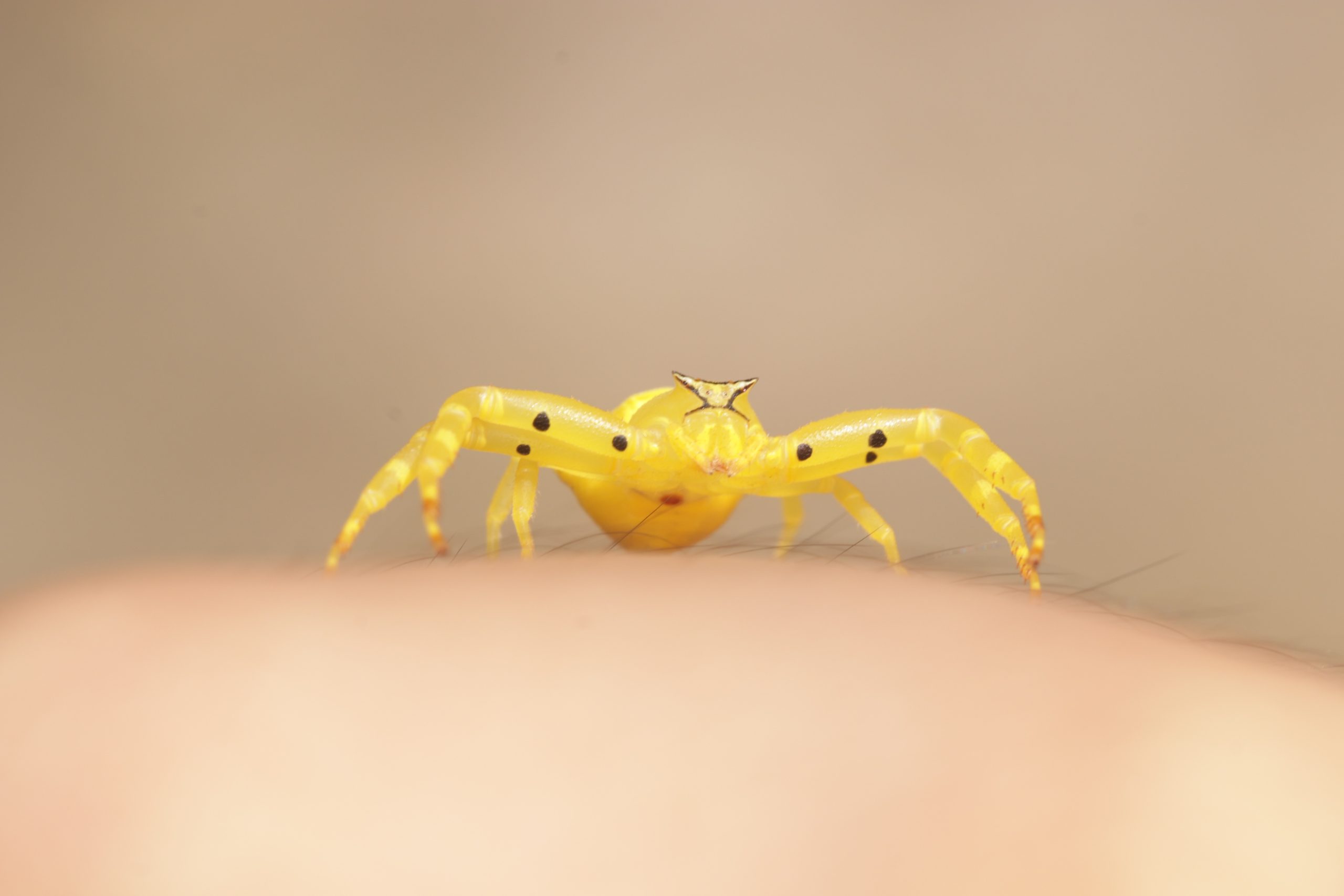
Through Finn, I learned that spiders can look exactly like ants, tree bark, or be shaped like and behave like scorpions. Through Finn’s incredible photography of these often misunderstood eight-legged fellow beings, I also learned that spiders can be pretty, friendly and… extremely cute.
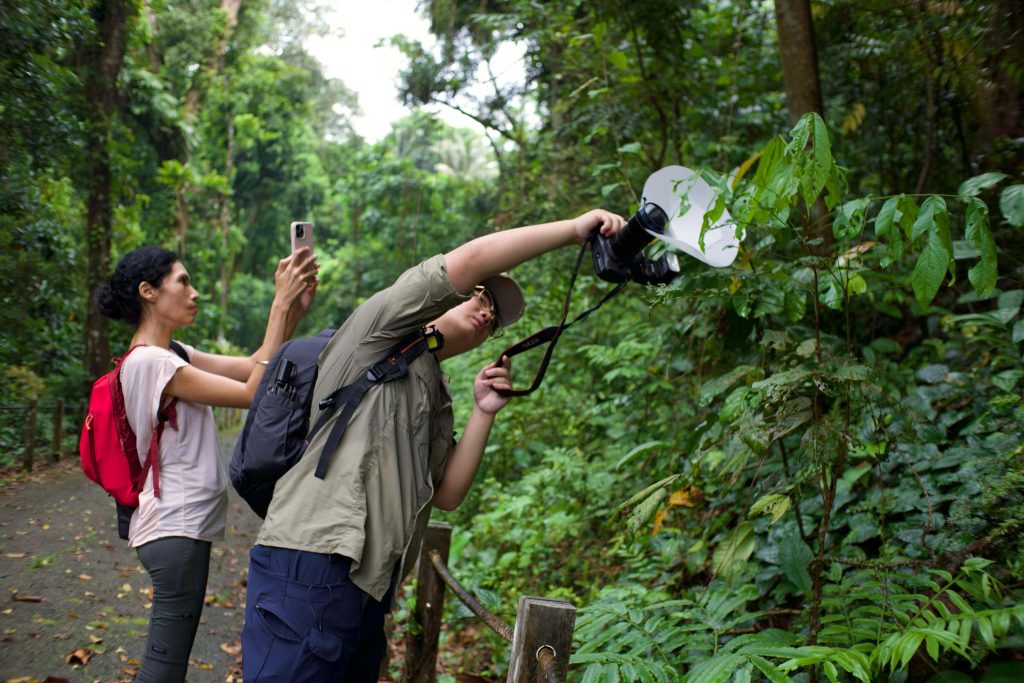
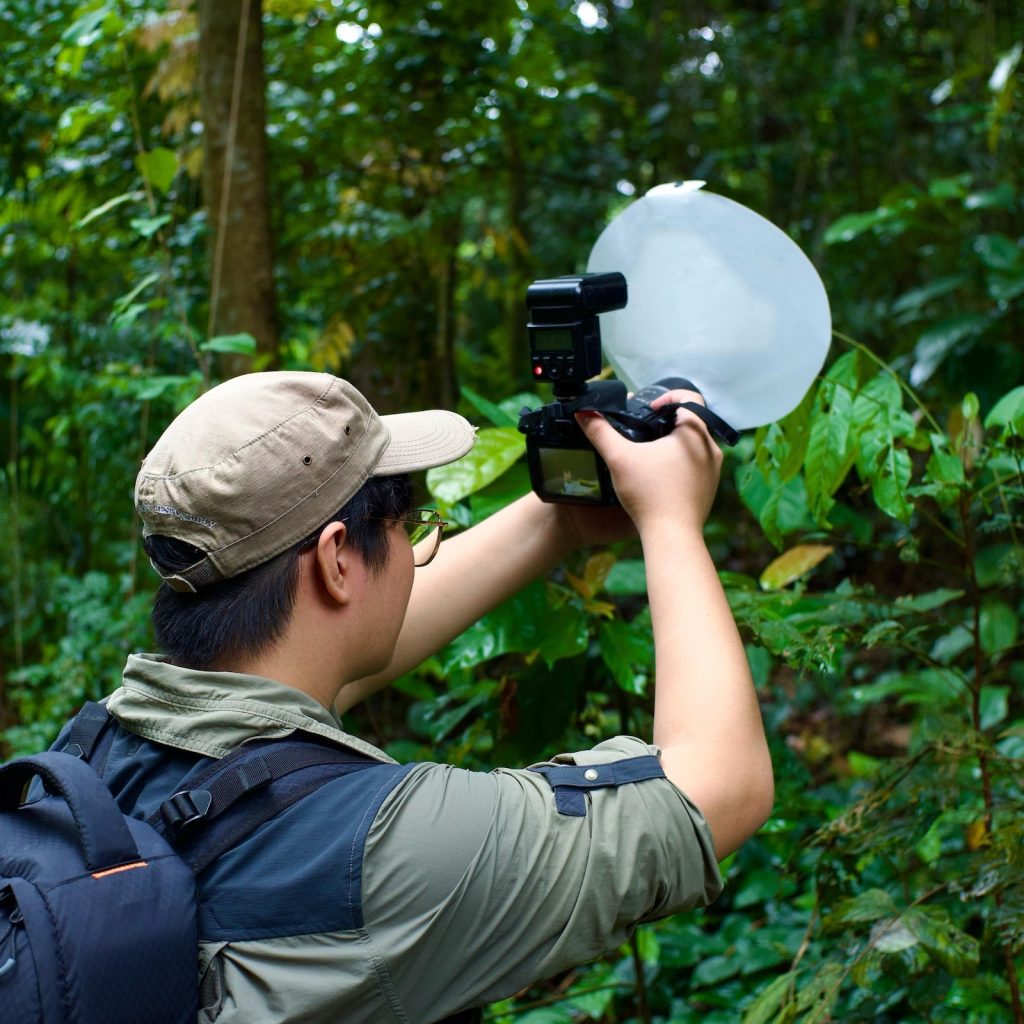
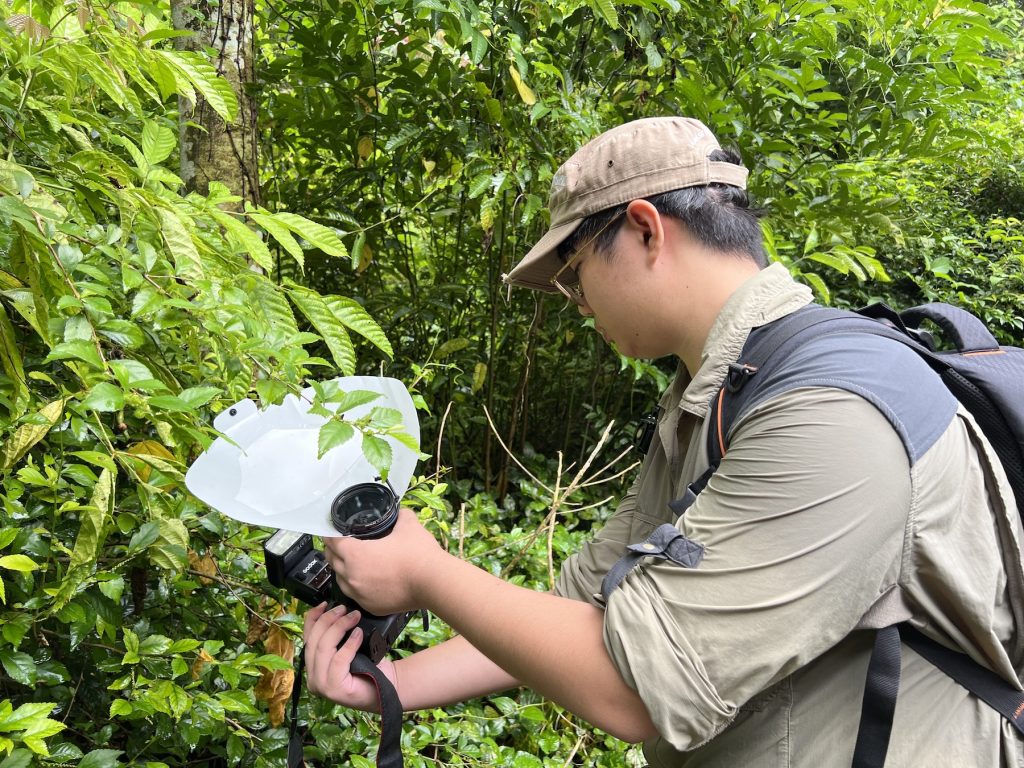
Finn and I first met for a chat at Bidadari Nature Park, when he told me how he got into spiders in the first place, and what his current spider-related mission is (more on that later). Then, we met for a walk at Thomson Nature Park, which Finn described as one of his favourite areas for spider spotting.
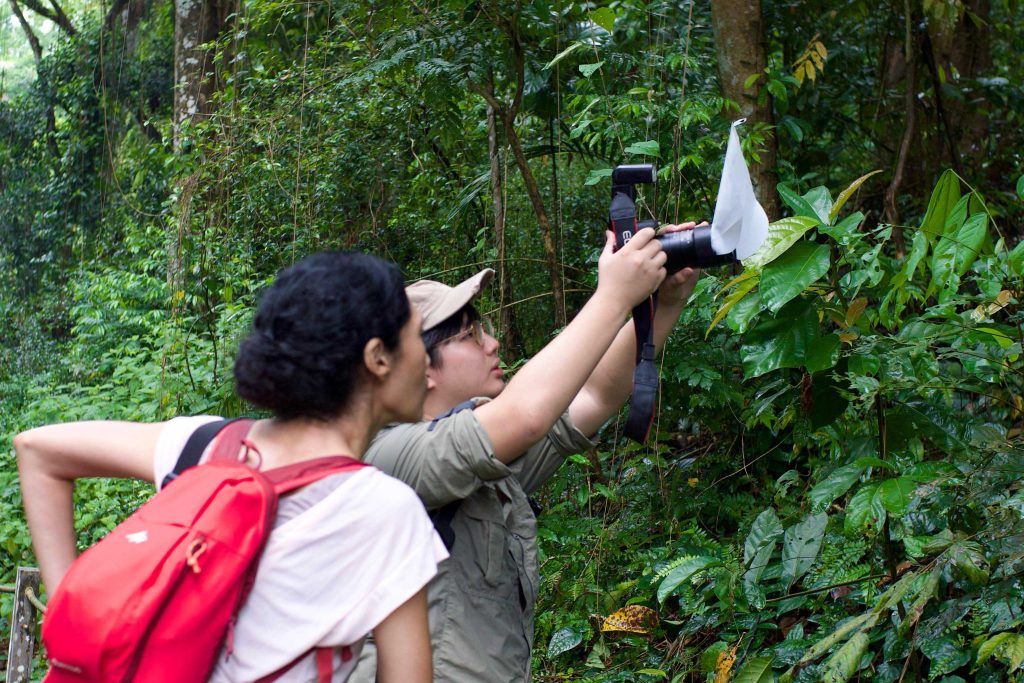
True enough, even though it had been raining earlier when we met at Thomson Nature Park on a Sunday morning, and this tends to make spiders shy to emerge, it wasn’t long before we came across a spider I’d only seen from Finn’s photos previously—an ant mimic spider.
You’ve guessed exactly right that spiders who look like ants are called ‘ant mimic spiders’. These are known by their scientific name, Myrmarachne. If you walk past this genus of ant-mimicking jumping spider as they rest on a leaf, chances are you’ll walk right by, thinking you saw… an ant on a leaf. Ant mimic spiders wave their front legs like the antenna of ants, and have narrower waists, similar to an ant’s body.
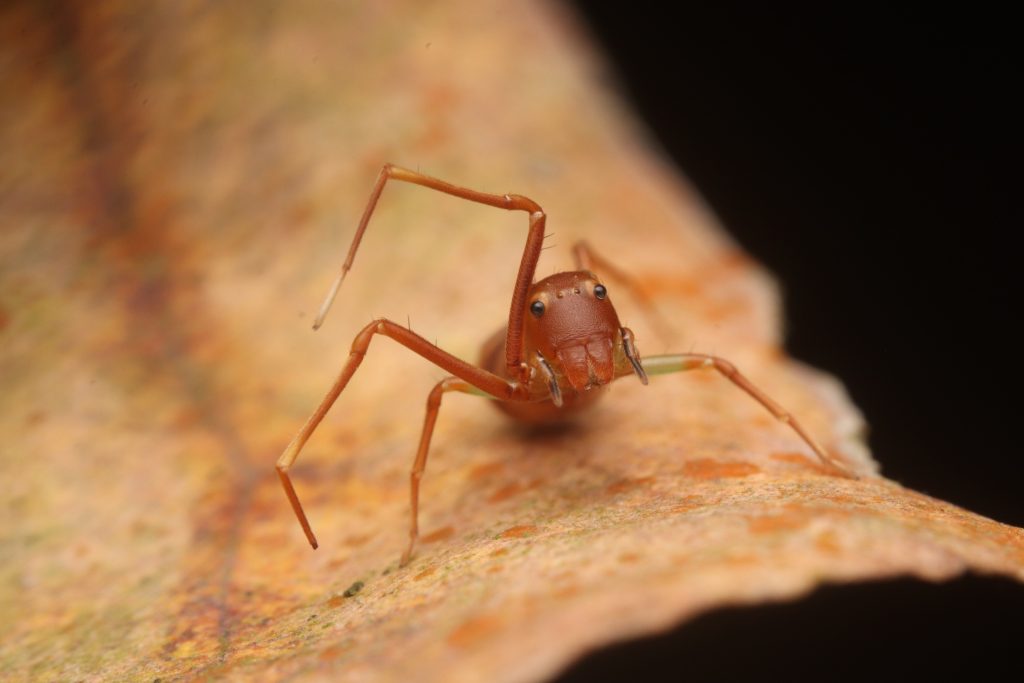
Why would a spider look like an ant? Or want to look like an ant? Survival. Over time, certain spiders evolved to take on the appearance of ants because ants are one of the most formidable characters in the insect world. Many ants have a fearsome bite and sting, using their stingers as their main defense. This understandably causes apprehension even in much larger animals, including us humans of course. Ants also live in colonies, and the prospect of a flood of ants pouring out of their nest and swarming a victim is unpleasant enough so most other insects, as well as other organisms, give them a wide berth. Spiders who are ant mimics therefore enjoy the fearsome reputation of ants simply by visual trickery. This anti-predator mimicry is known as Batesian mimicry, discovered by 19th century naturalist H. W. Bates, involving a harmless species evolving to mimic a harmful or unpleasant-tasting species for better chances at survival.
Finn tells me that ant mimic spiders aren’t quick to scurry away when a human approaches, unlike some other spider species. Clearly they feel secure in the soundness of their disguise. They know the other party would rarely be foolhardy enough to engage.
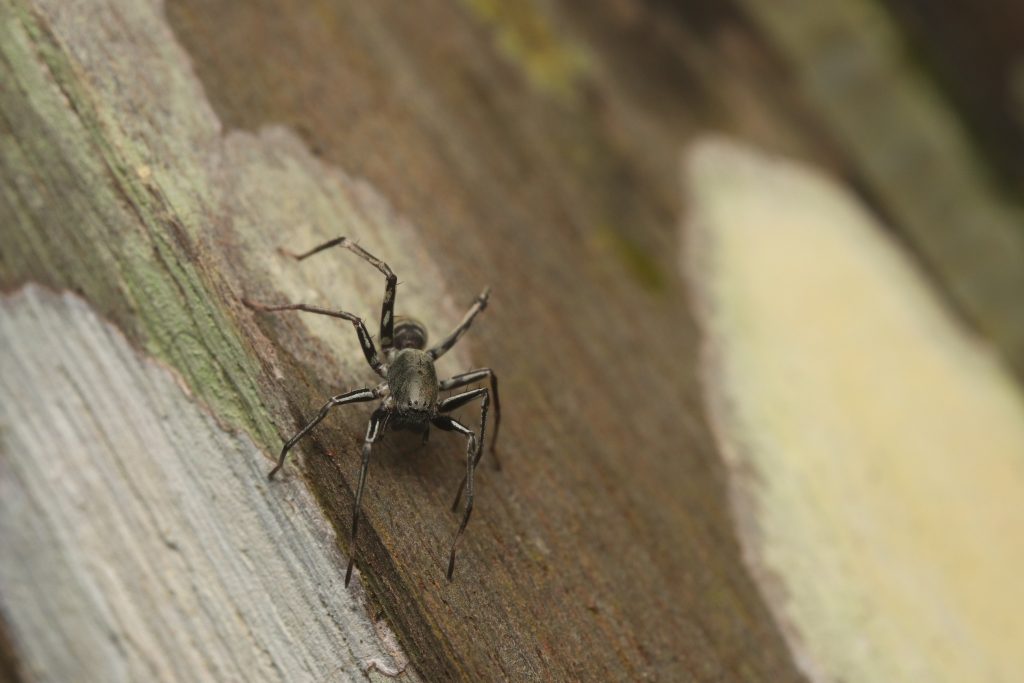
Finn also points out bark-mimic spiders and twig-mimic spiders. The idea of visual camouflage these spiders employ is one we are all familiar with, from numerous other species.
Another amazing spider we see is an incredibly beautiful, ethereal white one which looks like it could be straight out of The Lord of the Rings. Not only does it look like it belongs in the fairy realm, after Finn takes a macro shot of it, he points out how its radial pattern web has additional constructs of webbing in the shape of a cross, for reasons still unknown.
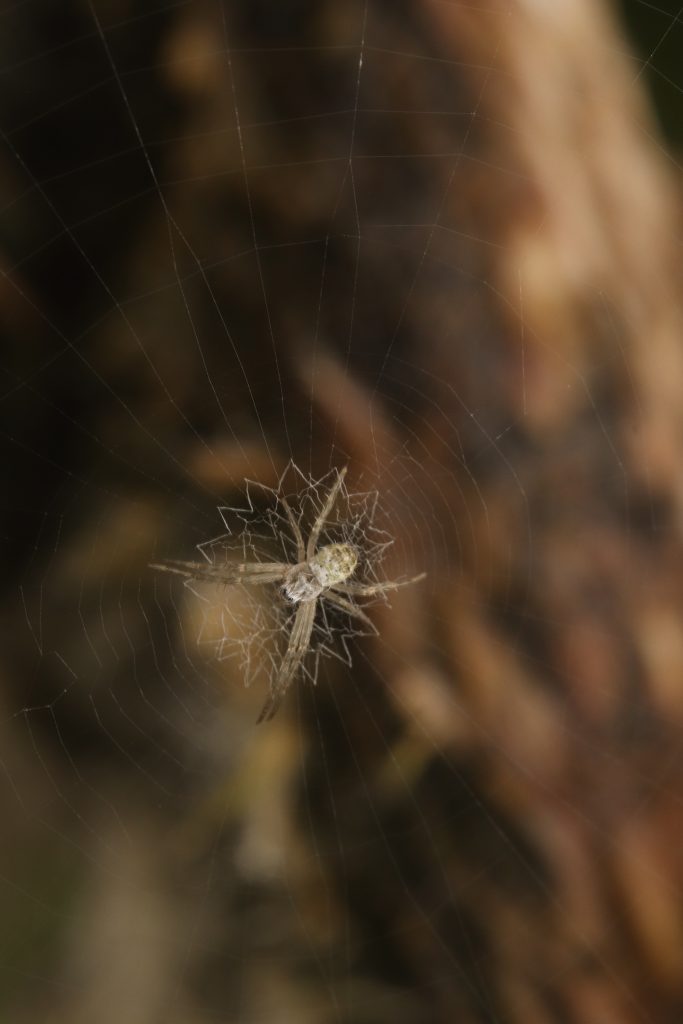
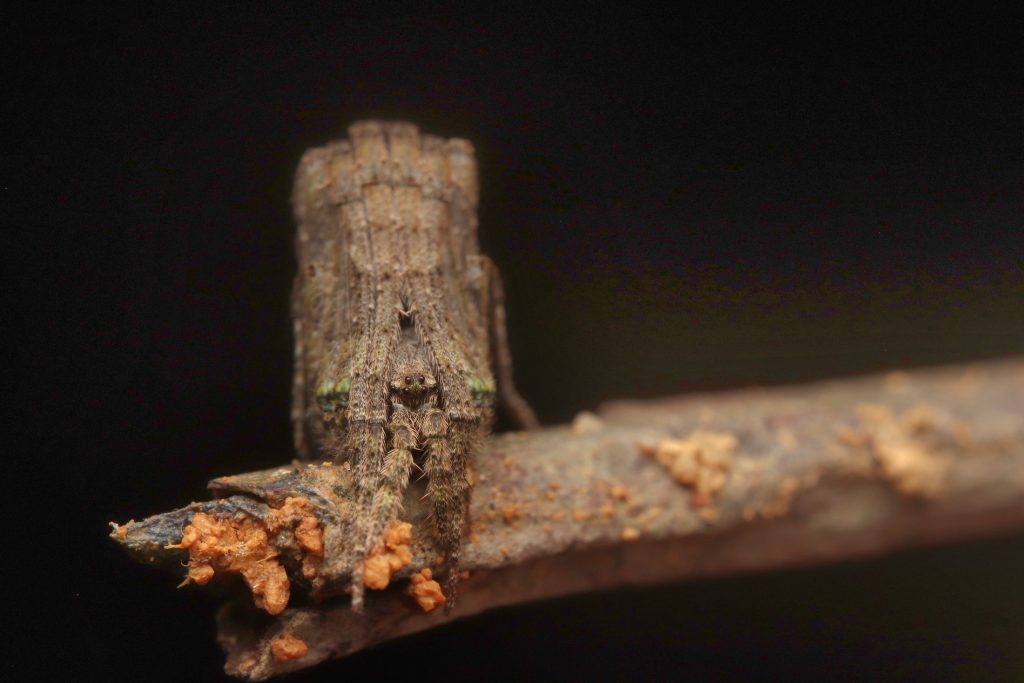
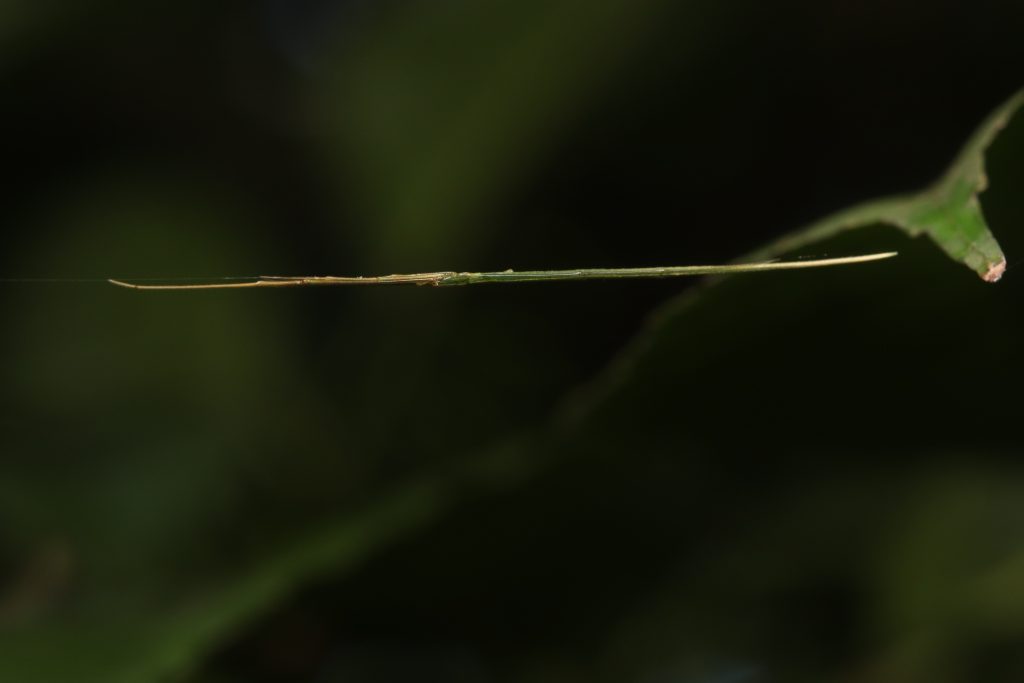
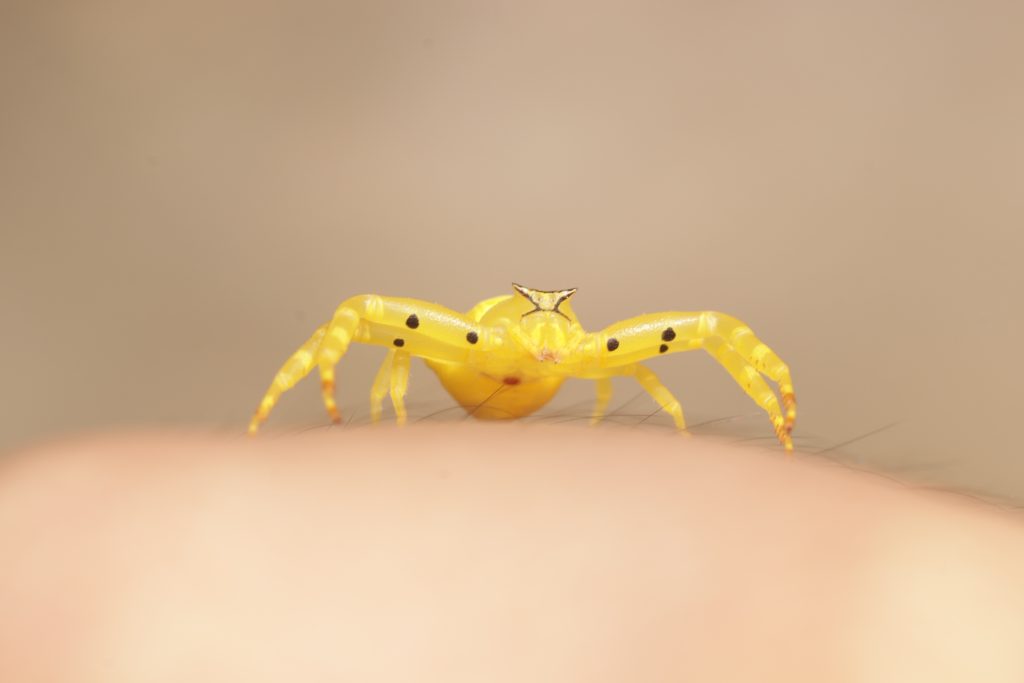
Later, as we sit down at a mamak restaurant for prata, thosai and teh, Finn shows me more of his photographs from his extensive gallery of macro photos of spiders. For the first time, I see their faces. Spiders’ faces. Some of them look grumpy, others look cheerful. Some of them are just downright cute. There are baby ones (juveniles) who look utterly adorable. They are furry, with shiny, expressive eyes. I feel like hugging them. If the photo’s scale were adjusted, they could be huggable soft toys or creatures from the mind of Jim Henson. I love them.
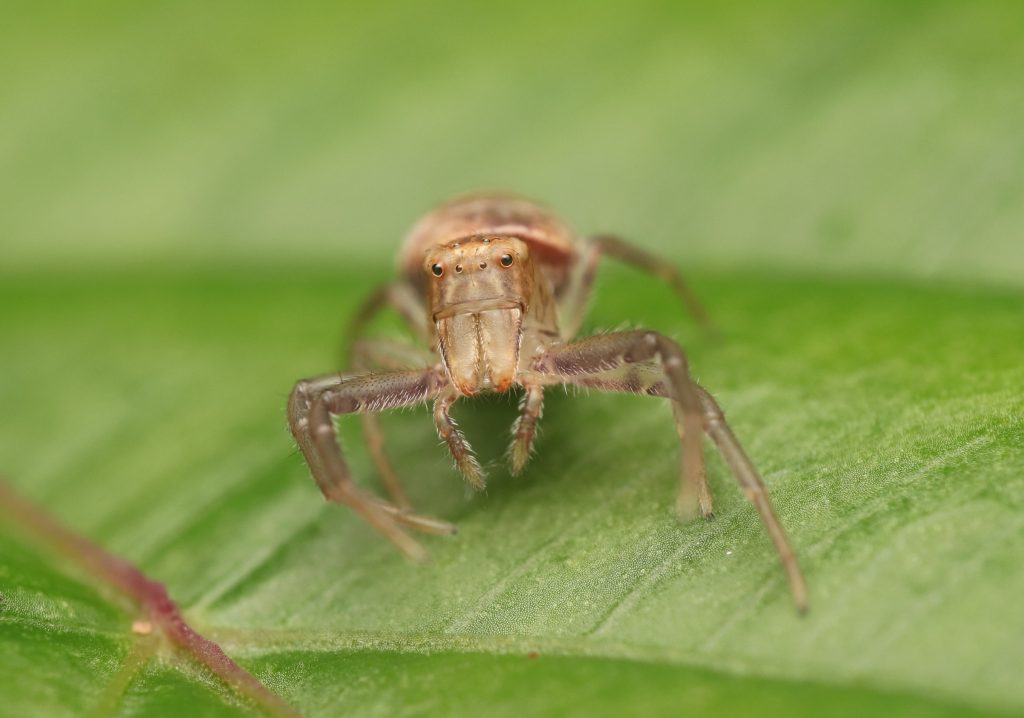
PHOTO: Finn Tan
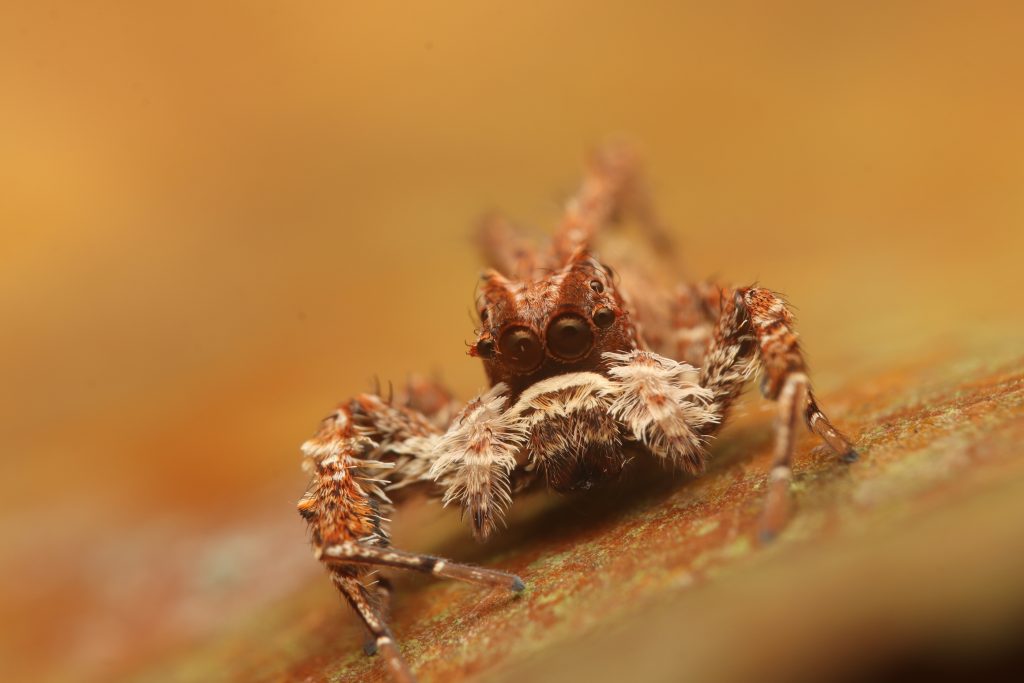
Then there are those I wouldn’t think of as soft toys. They would be glam rock stars. Like the Singapore blue tarantula (Omothymus violaceopes), native to Malaysia and Singapore, with their vibrant blue-violet legs. Not often seen because the species is largely arboreal. Another is a species that folds itself up and looks like part of a tree branch. You’d stroll by without realizing it was peeking at you. Only when its legs are unfolded does it reveal its true identity.
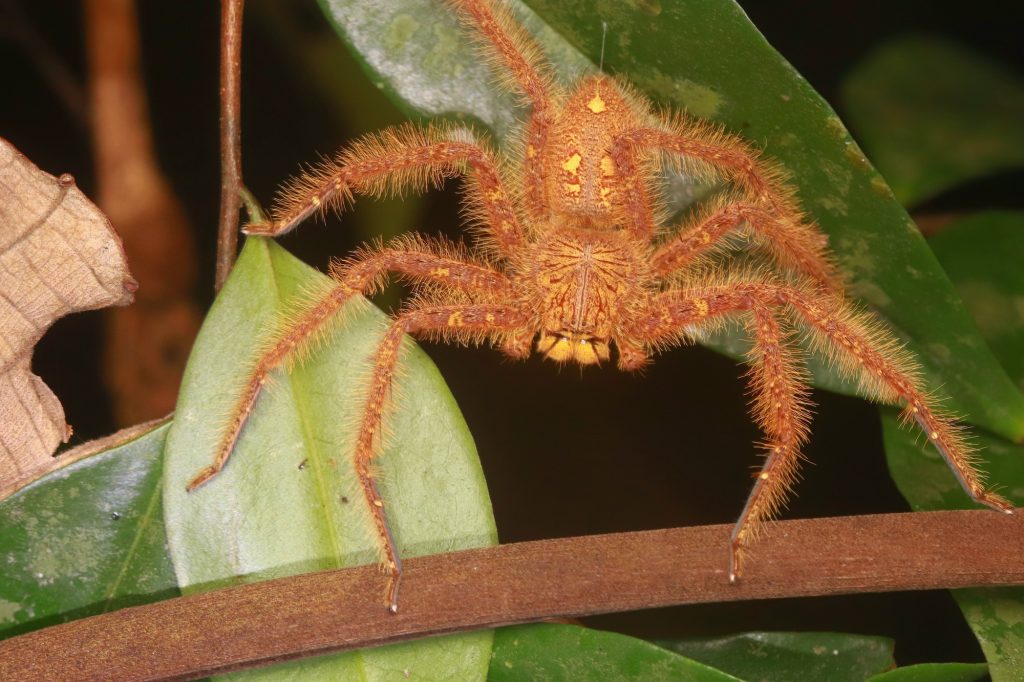
There is also Heteropoda davidbowie, a flamboyant orange huntsman spider named after musician David Bowie. Arachnologist Peter Jäger of the Senckenberg Research Institute and Natural History Museum came up with that name in 2008.
Finn has been studying and photographing spiders for over a year now. He’s particularly interested in locating and identifying Hamadruas severa, a species of Asian lynx spiders that’s been spotted in our neighbouring Southeast Asian regions such as Malaysia but not yet in Singapore.
Says Finn, “They have quite a wide distribution but there are no official records in Singapore. So I’ve been trying to find an adult. The adults are very pretty. The juveniles are very cute. They’re red and green and have a little mohawk. The older juveniles and adult females have a nice brown and yellow patternation. The adult males are a nice gold and black colour.”
Finn currently searches for them at the Woodlands Botanical Garden, where he volunteers with gardening and identifying various species. He explains why the discovery of Hamadruas severa in Singapore matters to conservation and the stewardship of the Earth:
“Being able to identify spiders and record that they’re there, that’s one more addition to the species count. Recording biodiversity in an area is important because it helps us make a case for conserving an area, such as for environmental impact assessments. By having another species that you can positively ID, that you can say for sure it’s there, that’s something you can use to defend why you have to protect this habitat or this specific patch of forest or grass.”
Finn Tan, along with other student volunteers and nature enthusiasts, give talks on nature at Woodlands Botanical Garden. The garden is open to the public and is located at Woodlands Town Park East, 134 Marsiling Road, Singapore 730134.
Follow Woodlands Botanical Garden on Instagram for updates on talks by nature experts like Finn, as well as the Garden’s other nature- and conservation-related activities