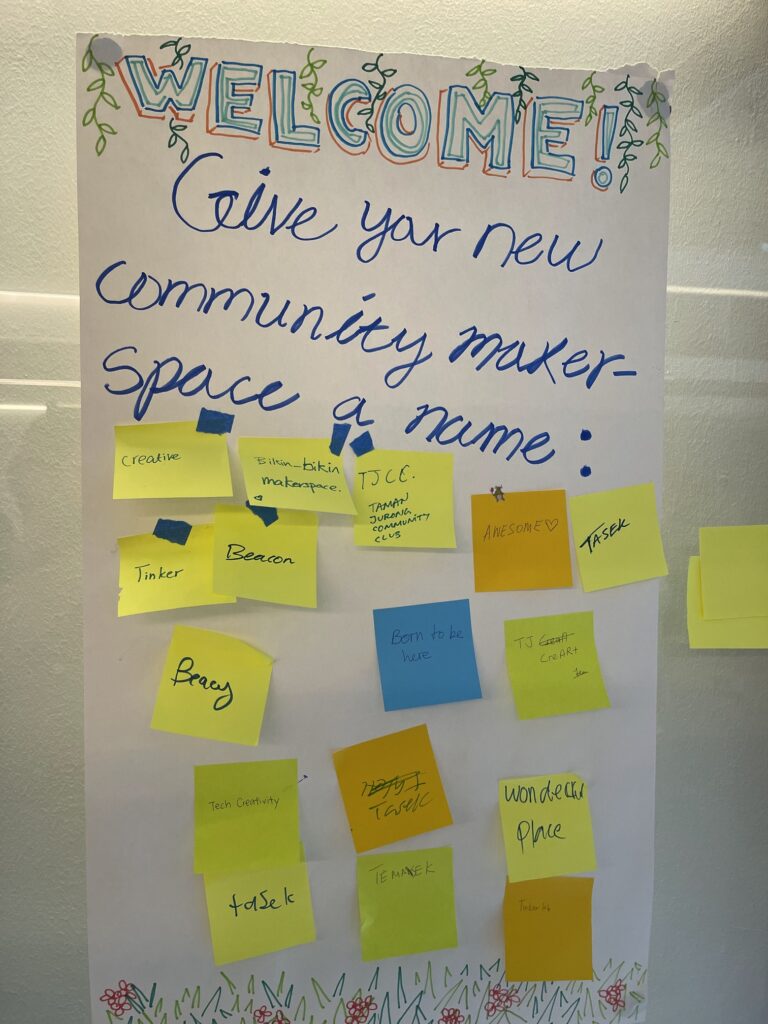
My ‘birthday’, the day I was officially introduced to the world, was 8th November 2025, though the preparations for this big day began much earlier (more on that part of my journey below). The name the three partner organisations gave me was ‘The Beacon’ and I liked that name very much. It reminded me of the towers at the edge of the sea humans construct, with a flashing lamp at the top, to guide ships along their way. I felt it was a great honour, and very humbling, to share a name with such a symbol of light and guidance. I only hoped I could live up to my incredible namesake.
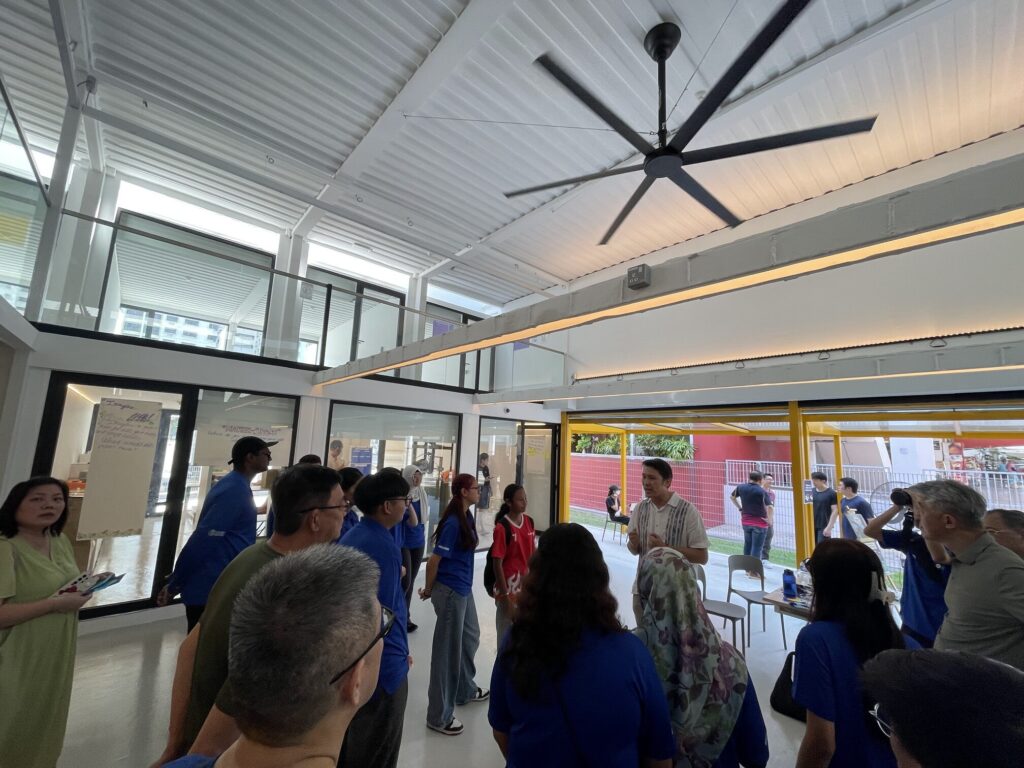
On that day, the 8th of November 2025, the room within the building made of shipping containers assembled on me, which was the makerspace set up by one of the partner organisations, Potato Productions, threw open its doors to welcome the public. There was a formal ceremony, with Member of Parliament representing the Taman Jurong division, Shawn Huang, present, and members of the three partner organisations—Tasek Academy and Social Services, a social service agency that is a registered charity with Institute of Public Character status, the Swiss sewing machine company Bernina International and Potato Productions, a family of companies working for social impact through technology and creativity.
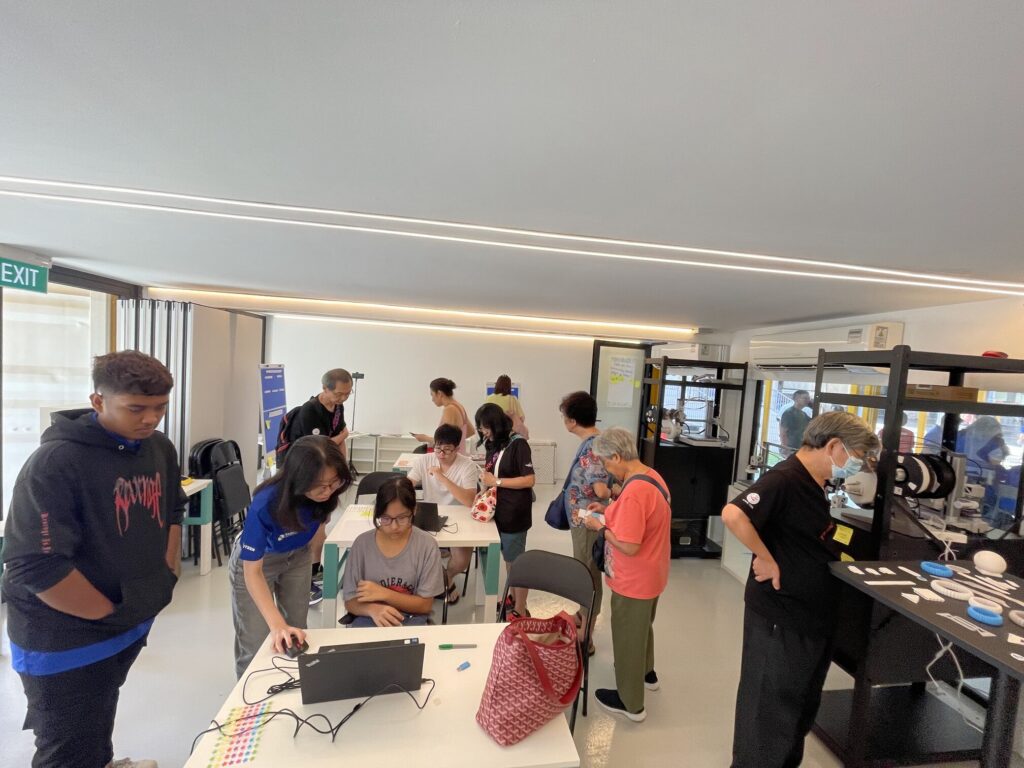
Besides visitors and students from the surrounding Taman Jurong neighbourhood, there were also a number of volunteers from Tasek Academy and Social Services, dressed in bright blue shirts. When visitors entered the makerspace, some of these volunteers would invite them to learn how to use TinkerCad. I had previously learned that this is a software used to design something before it is sent to a 3D printer.
Gathering ideas and direction from the ground
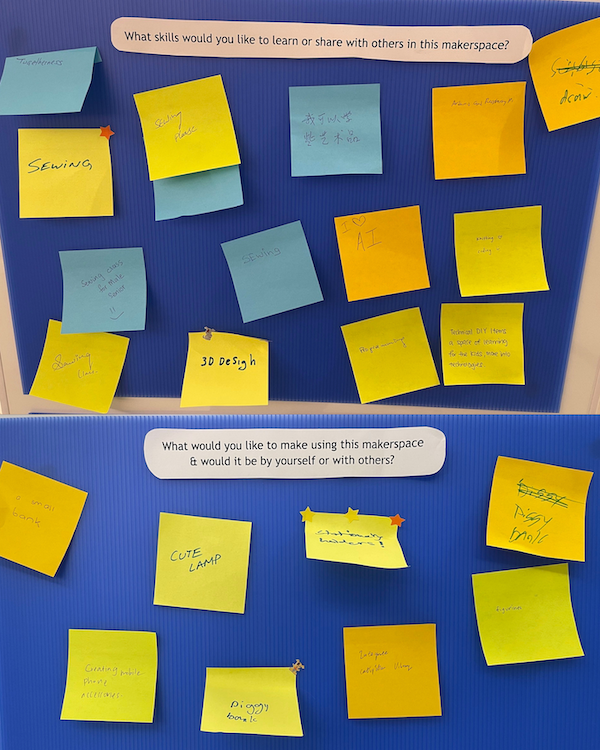
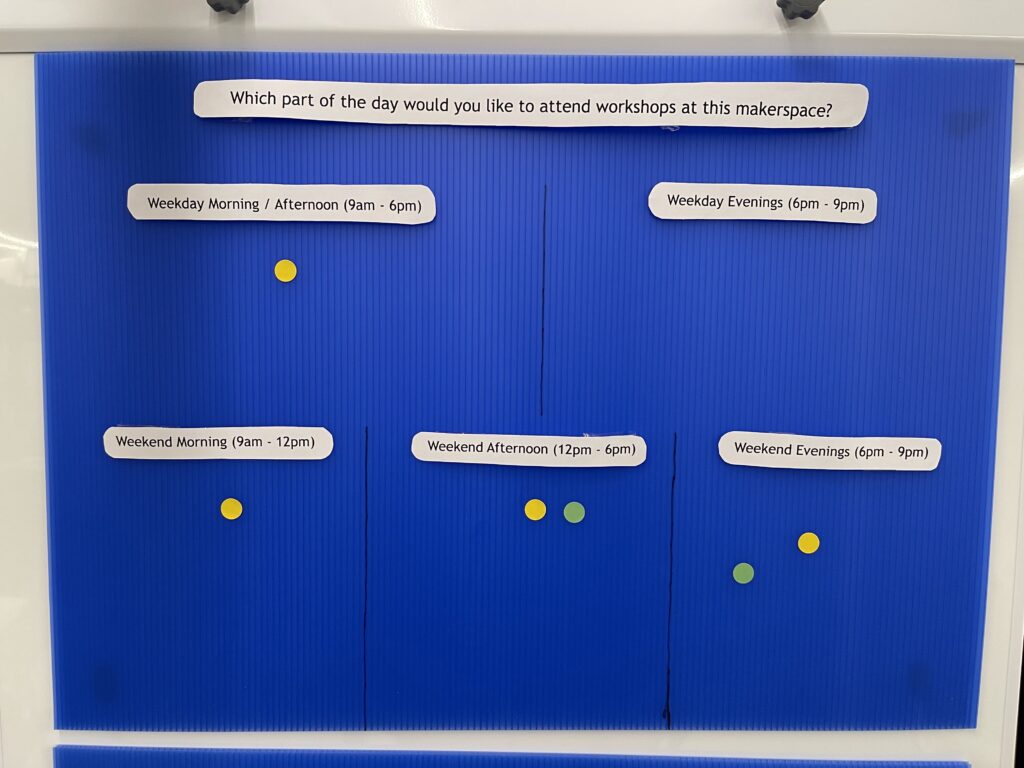
It was important to partner organisations that The Beacon was used to cater to the real needs of the community, so they set up blue boards for visitors to write what they would like to see the space used for, activities they would like to participate in and the skills they wished to learn. Cardboard arts and beginner craft projects like making a piggy bank turned out to be popular. To better align activities offered with people’s availability, feedback was also solicited for when people would like to attend workshop sessions at The Beacon and the makerspace.
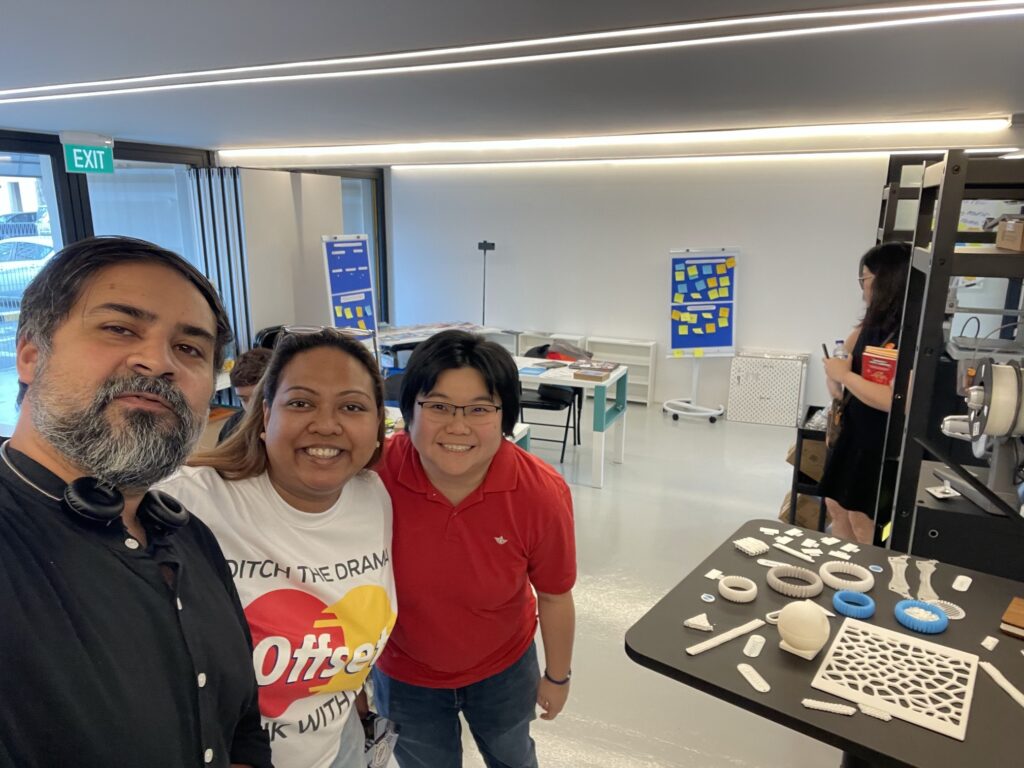
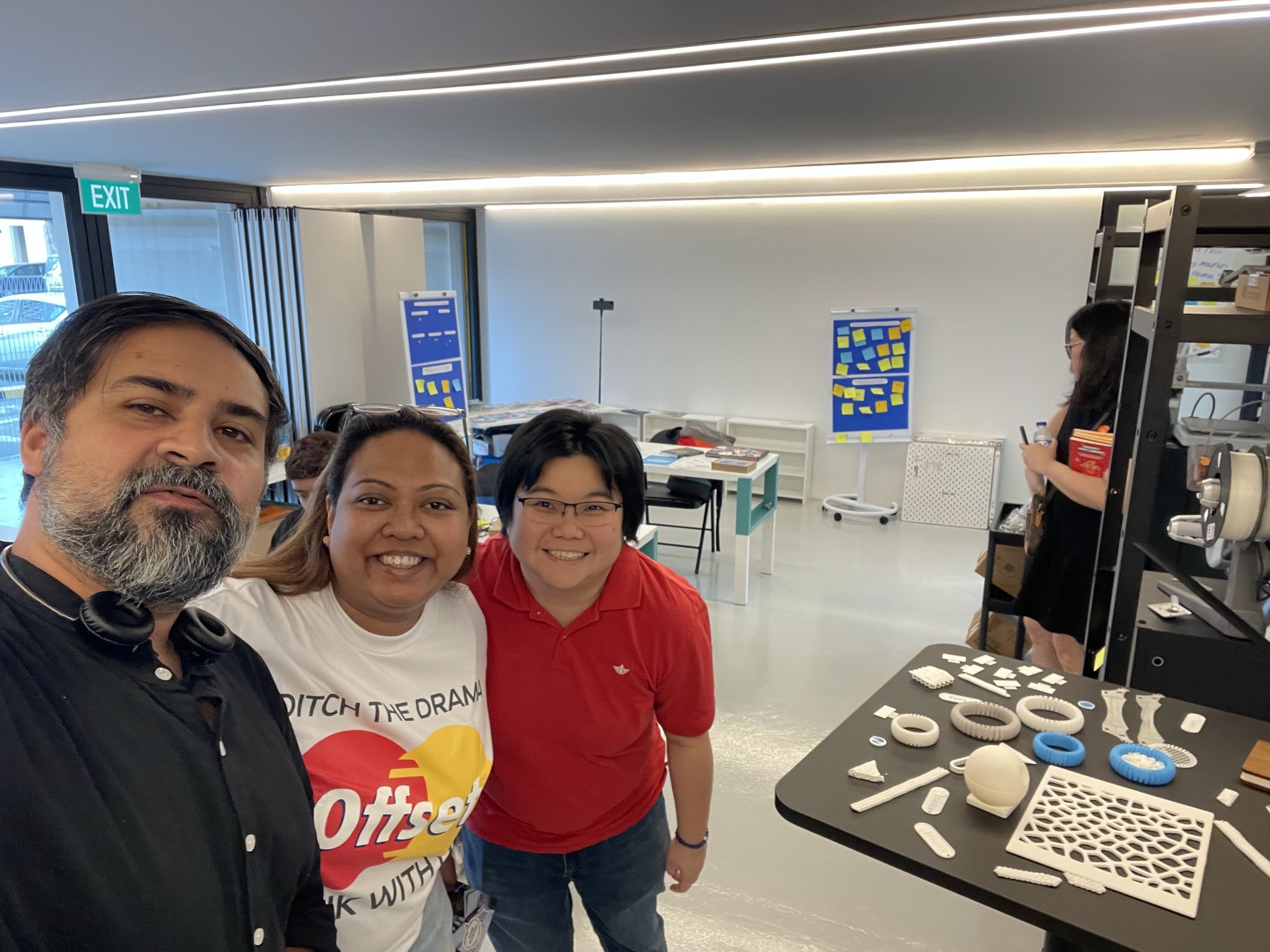
At the end of my birthday on 8th November 2026, Sheila of River Valley Irregulars, one of the companies within the family of companies that comprise partner organisation Potato Productions, stopped by with some books she had collected for the library she was setting up at The Beacon. From what I heard of her conversation with Saad Chinoy (at left in the photo above), of SpudnikLab, the Potato Productions company setting up the makerspace, the library would be situated where the blue boards are in the photo (below).
In the same photo above, are the fun results of visitors playing and learning at the makerspace that day. On the table are an assortment of 3D printed objects— flexible bangles and a lattice-patterned object that is an example of voronoi design. Voronoi design is based on an organic patterned algorithm that can be used to create cool structures not bound by repeating geometric patterns. Over the past weeks, I had learned that 3D printers are not restricted by the same limitations as industrial production machines. This means you can design and produce any organic shape you like. Also on the table is a Star Wars-inspired Death Star lamp, designed to hold a tea light inside.
The days and weeks before my big day
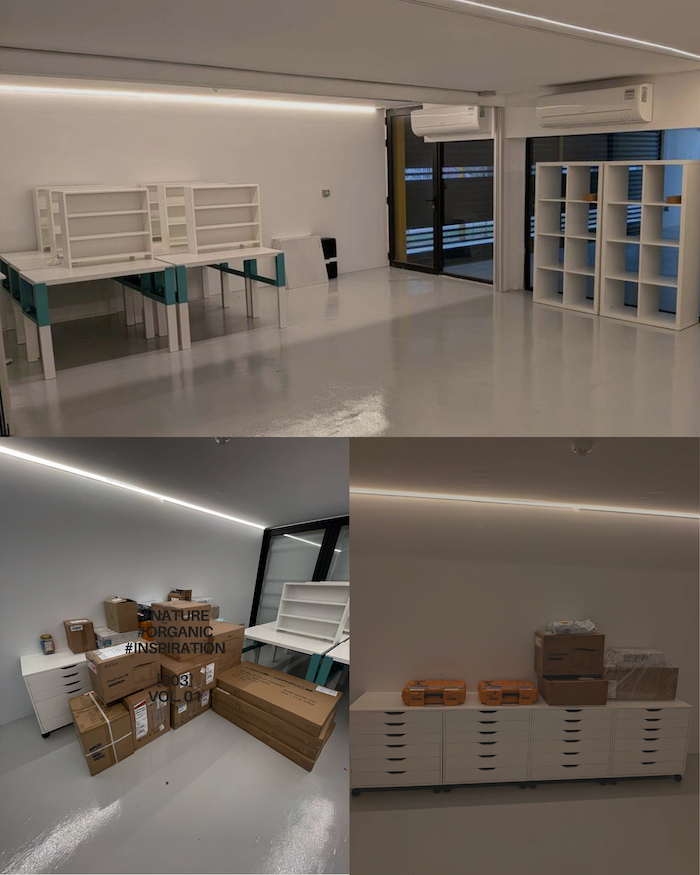
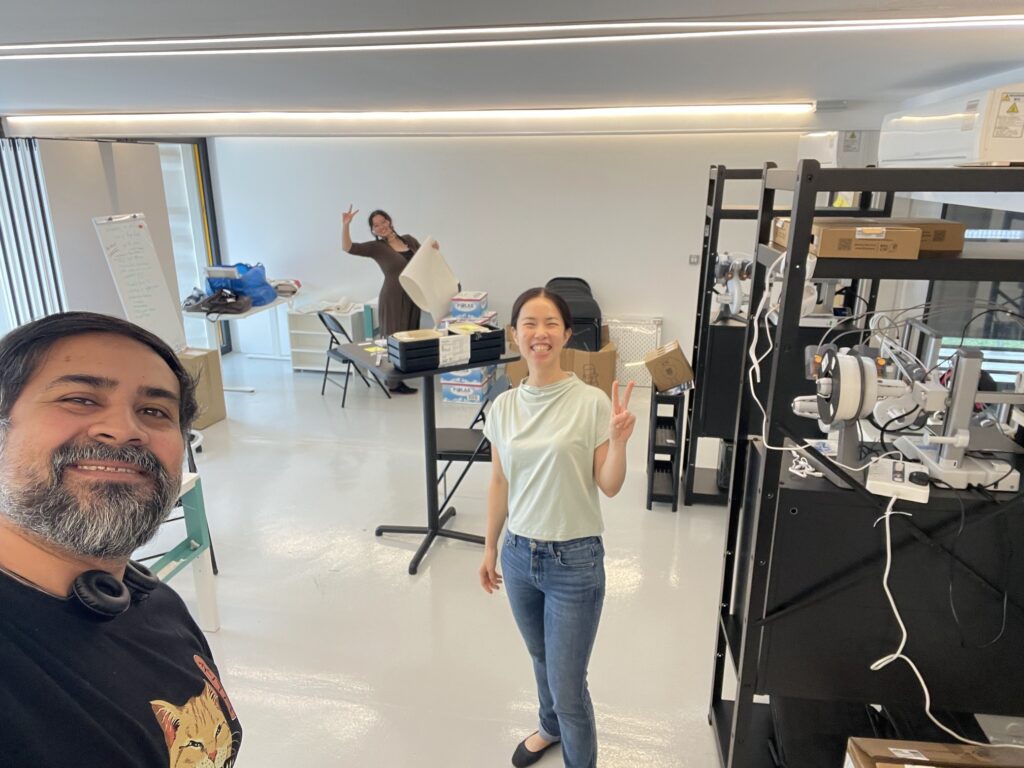
The room within The Beacon started out completely empty, except for tables and shelves (see the top photo of the composite image below). One of the first things Saad Chinoy of Potato Productions’ SpudnikLab did was to install multifunctional shelving units (bottom right photo in the composite image). These storage models come on wheels, so they can be easily repositioned around the space according to the differing needs of specific activities. The drawers were intended to hold stationery and art and craft tools. At this moment, these drawers are being used to store laptops, which fit their slim dimensions perfectly. The orange boxes in the bottom right photo are two sets of hand tools. These include hammers, drills, scissors, pliers and screwdrivers.
Resting on the drawer unit is a box containing a FiloDryer filament dryer. The plastic used for 3D printing at the makerspace is biodegradable, so it absorbs moisture from the air. Before printing a large object, the plastic filaments need to be dried. If the plastic filaments are not dried properly before being used to print an object, the moisture in the plastic will cause tiny bubbles to form all over the object. If an object has thin walls, the bubbles are especially noticeable. While this may or may not be aesthetically-pleasing, depending on your taste, I learned from listening to Saad that the presence of these bubbles can compromise the structural integrity of the object if the walls are thin. Also, most objects are made of parts of varying thicknesses, so it is important to remove the moisture from the plastic filaments thoroughly.
The makerspace was also outfitted with whiteboards on wheels, which can hold mahjong paper (photo at bottom left of the composite image) and low-cost 3D printers in the boxes in the centre. The decision was made to purchase a few low-cost 3D printers instead of one expensive one, so multiple people can use the machines to print their projects simultaneously, rather than waiting in a long line to use a single machine.
The magic of changing colours in 3D printing
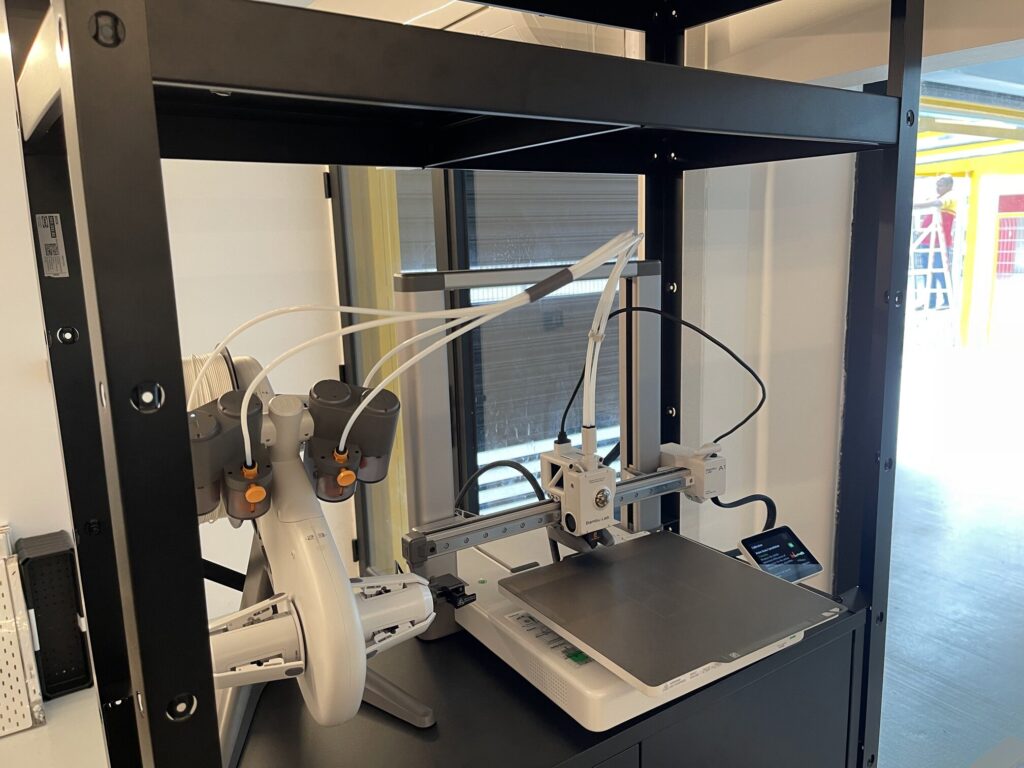
So I learned—again from listening to Saad’s explanations to visitors—that the machine on the right (see photo below) with the square silver disc is an A1 3D printer by Bambu Lab and it works by melting plastic. The plastic comes in a spool of about 1kg. This 3D printer can only melt one type of plastic at a time. The machine next to it with the orange buttons (at left in the photo below) is an AMS Lite (Automatic Material Selector) colour changer. The colour changer switches the spools from one colour of plastic to another, so you can print an object with more than one colour.
After such a long time of waiting and wondering what my fate would be [see the post about my life before, in How A Makerspace is Born (Part I)], it felt like the actual day of my birth passed all too quickly, but the excitement and joy I felt during those hours when visitors flocked in and out, laughing and learning alongside me, has stayed with me every day since.
Now, I look forward to what each day brings, and the growth for everyone who enters into this community space known as The Beacon, and the Potato Productions Makerspace.
The Beacon, where the Potato Productions Makerspace resides, is located on the grounds of the Taman Jurong Community Club, at 1 Yung Sheng Rd, Singapore 618495. Both The Beacon and the Potato Productions Makerspace are open to the public.