
Many of us plug into the universe of app and online services on our smartphones every day as easily as breathing, but for those with vision challenges, it isn’t easy at all. Tiny font, low contrast designs and complicated language are hurdles people with vision difficulties have to grapple with each time they face a smartphone screen.

That’s why in 2023, we conceived our D.Lit toolkit to help people gain digital confidence and develop digital skills using their smartphones. It comprises a deck of specially designed A6-size cards that help people learn how to use everyday apps and online services. In the later part of 2024, our team embarked on the design of a new set of skills—this time to address the needs of an often-overlooked community: individuals with low vision.
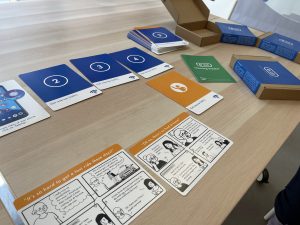
For our new deck for the vision-challenged, we collaborated with design studio 55 Minutes to create this as an add-on to the original D.Lit deck. We knew that 55 Minutes, our sister company in Potato Productions, would be the perfect fit for the project addressing the specific needs of users with low vision, because of their focus on inclusive, user-centric, empathetic design.
As we expected, the collaboration was defined by a methodical and comprehensively empathetic process. The 55 Minutes team engaged us and our users through a series of in-depth, one-on-one sessions. This co-design approach involved iterative prototyping and testing.
Larger fonts? Check. Higher contrast? Check. Simplified language? Definitely! All these were essential for creating a deck that was genuinely intuitive and easy to use for those with vision challenges. Over four short months, a new deck of D.Lit cards came into being.
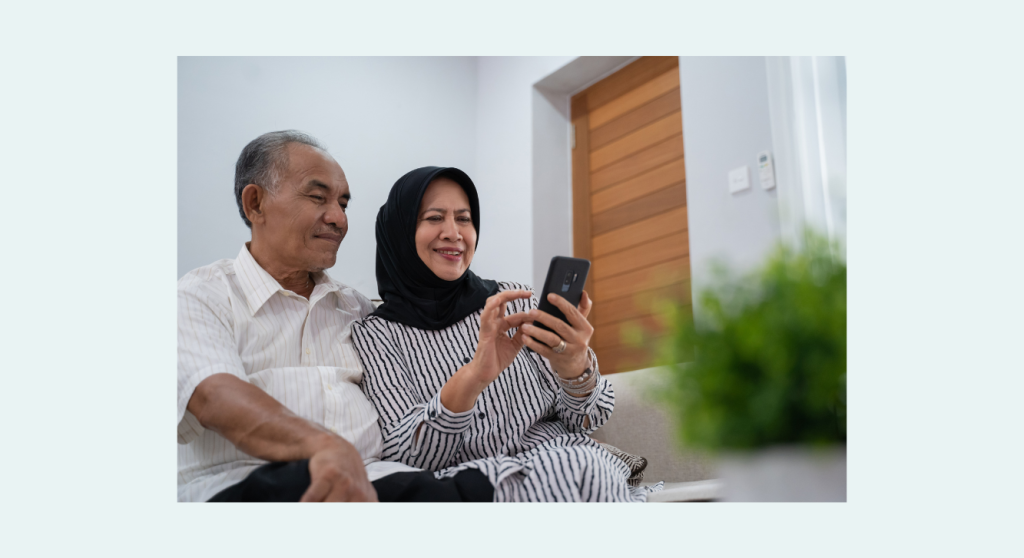
We are incredibly proud of the outcome of this partnership and the new dimension it brings to the D.Lit toolkit. This new deck for the vision-challenged will enable a wider spectrum of learners to build confidence using digital smartphone technology, and we’re truly excited to share it with you!
For more information about D.Lit or using it in your organisation or community, please contact us for a low-cost facilitated session, at impact@spudniklab.com.
Want to know more about our design process with 55 Minutes? Read about the experience here.