Asmawati Saimon is an educator in the special education field. Through the years, her love for animals has led her to be a volunteer at the Singapore Zoo, where she worked with reptiles, with wildlife groups overseas, and as a citizen volunteer for the Raffles’ banded langur survey. Her most recent adventure, from July last year to February this year, was as a volunteer for the Changi leopard cat survey project, with the Singapore Wildcat Action Group (SWAG).
In 2019, Singapore Wildcat Action Group heard about a dead leopard cat spotted on a road in Changi, likely the victim of a collision with a car. But it was in 2024, when a member of the public shared his photo of a leopard cat observed along Changi Coast, and near a construction site, that SWAG felt the need to explore more about a possible population of leopard cats at Changi.
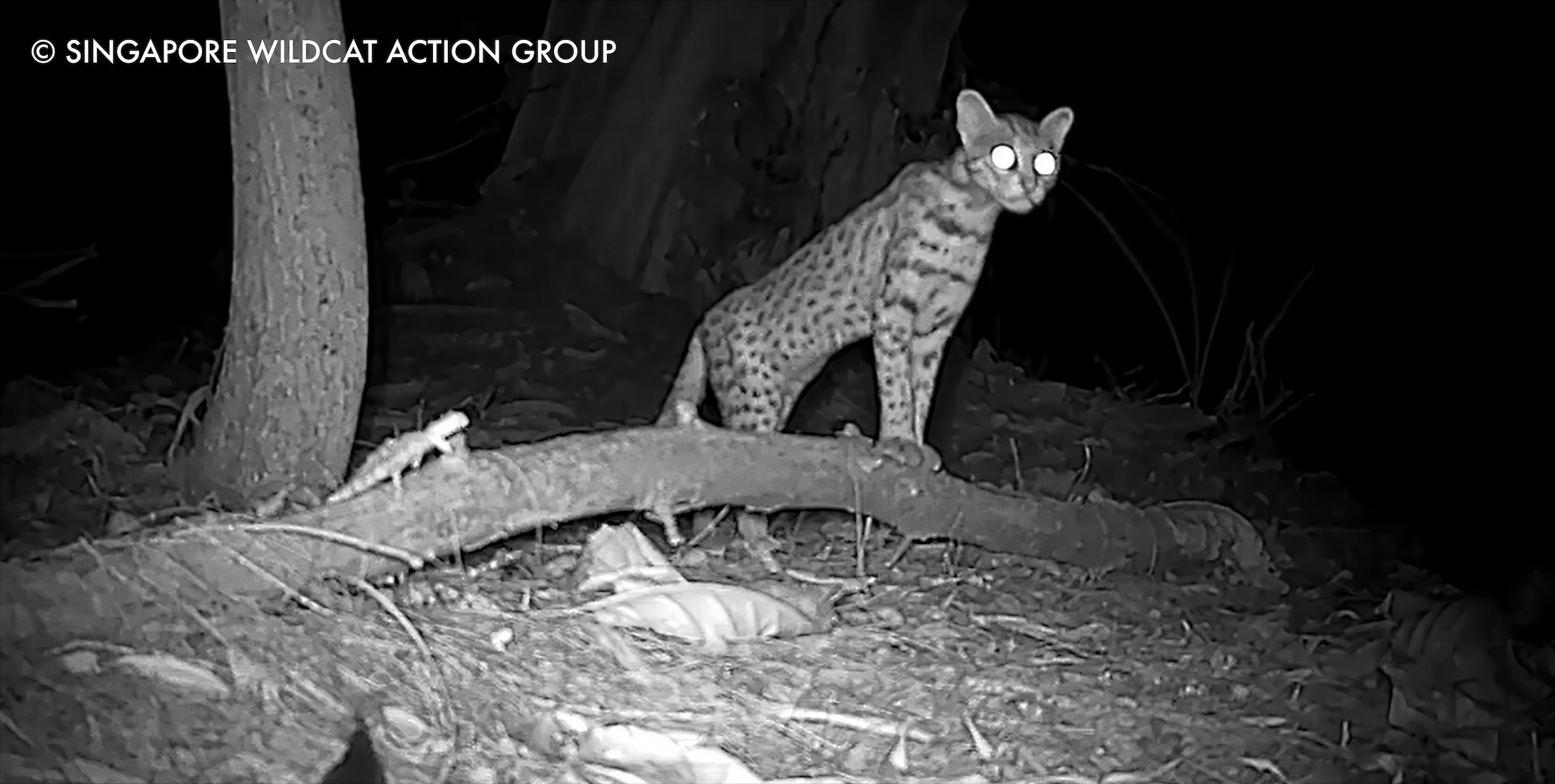
Leopard cats (Prionailurus bengalensis) are wild felines native to South, Southeast and East Asia, including Singapore, and parts of China and Taiwan. They are about the size of a domestic cat but with longer legs, weighing typically 2–7 kg, with a distinctive leopard-like coat. Leopard cats are strong swimmers and climbers and nocturnal hunters.These carnivores feed on small animals like rodents, birds and insects. In Singapore, this species is listed as critically endangered. Most of the local leopard cat population is found on Pulau Tekong, Pulau Ubin and the Western Catchment Area.
The presence of the leopard cat in Changi suggested to the Singapore Wildcat Action Group that there might be more leopard cats in the vicinity.
How the leopard cats might have come to be there could not be known for certain, but it was speculated that they might have swum over from a nearby island.
The Singapore Wildcat Action Group obtained permission from NParks, Singapore’s government agency overseeing parks, nature reserves and biodiversity conservation, to conduct a survey in the area, to ascertain if indeed there were leopard cats there, and if so, how many of them.
The survey project would involve setting up 18 motion-sensor camera traps in the ecologically degraded area in coastal Changi where the leopard cats might possibly be living.
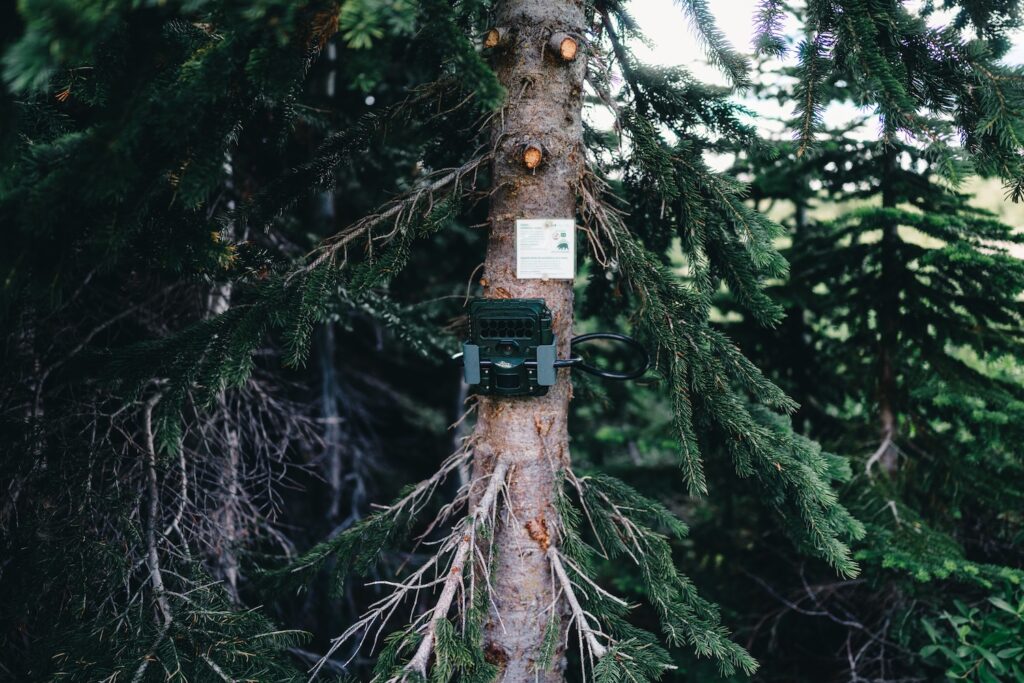
Camera traps are automated cameras fitted with a motion or heat sensor, usually infrared, that record a photo or video when an animal or person passes by, triggered by changes in movement and heat. When an animal enters the camera’s field of view, the sensor triggers the shutter.
SpudnikLab spoke with SWAG volunteer Asmawati about her experience with this citizen science project.
How did you get involved in the Changi leopard cat project?
When I heard about it, I was surprised there are actually leopard cats in Singapore. Because previously I volunteered in Vietnam and there were leopard cats there. I didn’t know that Singapore also has them, so I was intrigued, because I love cats. I went to try to do this because I had done a citizen survey before, for the Raffles’ banded langur, with the Raffles’ banded langur group. So this leopard cat survey is considered as my second citizen survey. The Raffles’ banded langur survey was also where I met Dr. Vilma (co-founder of the Singapore Wildcat Action Group).
What did you do for this citizen science project?
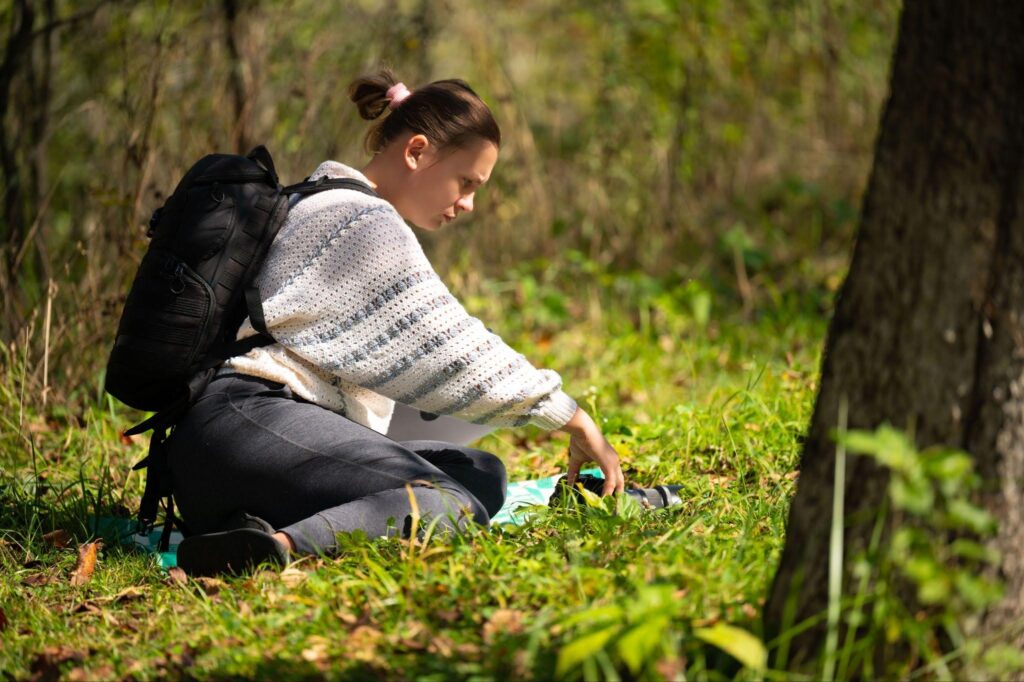
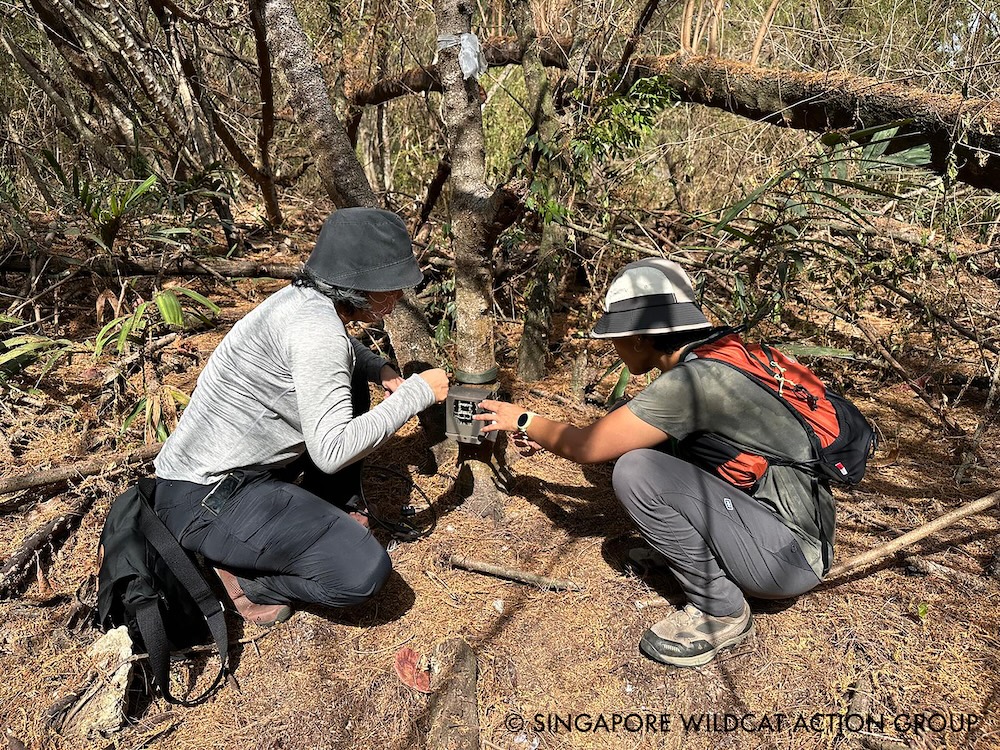
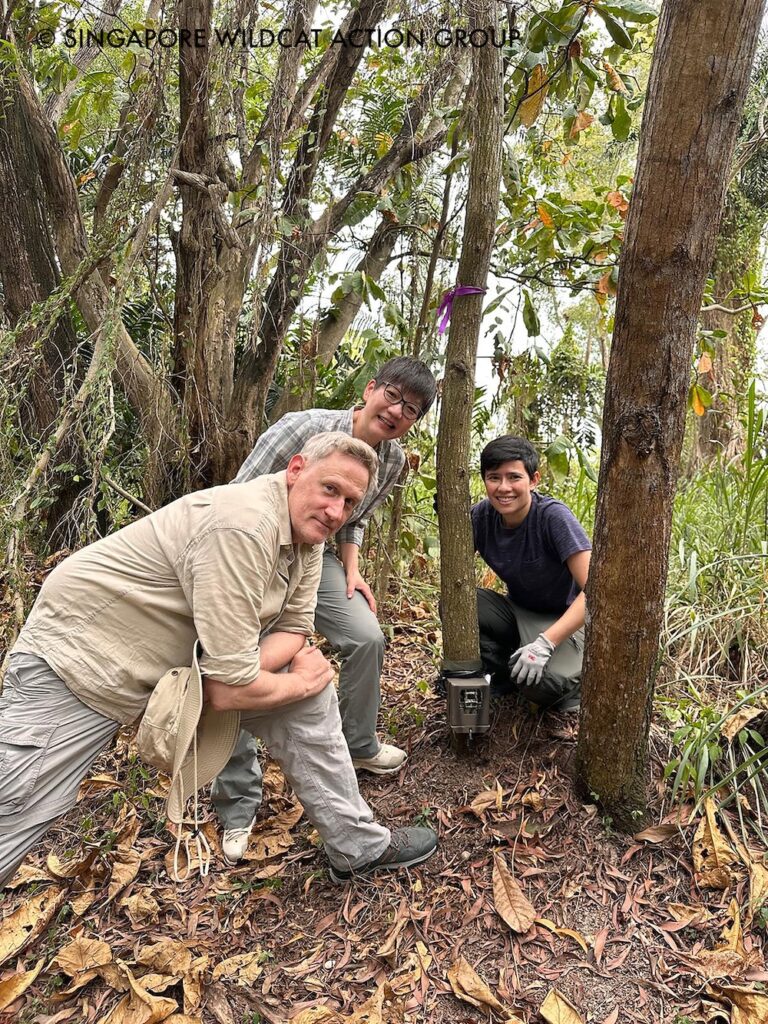
I went maybe four or five times, not that many times because of my schedule. Mostly it was on a weekday, so after work I would go straight away to meet them. Normally we would meet at a certain location then go into the forest. Of course, we had a permit. Then we would search for places to set up our camera traps. We would need to find a suitable tree branch, or tree trunks. You cannot have the tree trunks too thick, too thin, too flimsy or with ants. And you need to find tree trunks for the cameras to face each other, so you can have footage of both sides of the leopard cat while they are passing. It’s to identify the markings.
So we needed to find locations where there are two suitable tree trunks, not too far away, not too close. And then we had to clear leaves, some bushes and branches, so the cameras can have a clear view when the leopard cats actually pass by.
We would also need to check the environment, because maybe there are monkeys around, because they might be curious about the camera traps, or even people, if the cameras are near the road. There was one time we found a place we thought was suitable, then I saw a hornets’ nest nearby. I’ve never seen a hornets’ nest before. It was beige, and very textured, like a football but more oval. I was just observing it, thinking, ‘What in the world is that?’ Then I saw a hornet. I asked one of the volunteers, “Do you see what I see?” He said, “Oh my god. Everybody move quietly,” and we moved away. Thankfully we discovered it before we set up!
After seeing the video footage later, we have seen snakes, monitor lizards, and so many other animals, like wild boars. The number of native animals is incredible.
Before that I’d never seen a camera trap in real life. Dr. Vilma was very patient in showing us how to set up the cameras. You need to set the location and date. After that, you set the camera trap in position and make sure it’s level. In rain or thunderstorms, the camera can get loose, so we must make sure it’s tightly secured.
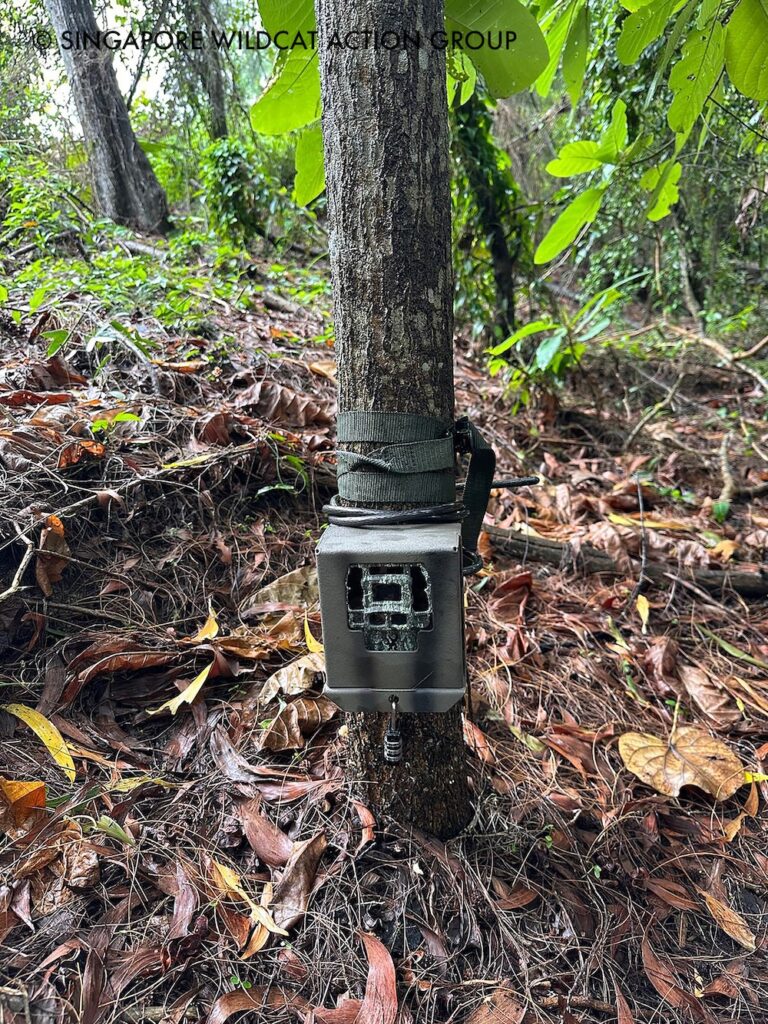
So the next week when you get there, you start off by viewing the footage from the previous week. When you see footage of an actual leopard cat, it’s like winning the lottery. Every one of us was so excited. Viewing the footage was another part of the work we do for the project, as well as taking down the camera traps. Even that could be a challenge because I’m scared of lizards. One time when I opened the box, I nearly threw away the camera because we saw lizard eggs in it. A lizard managed to get inside the box somehow despite it being sealed up!
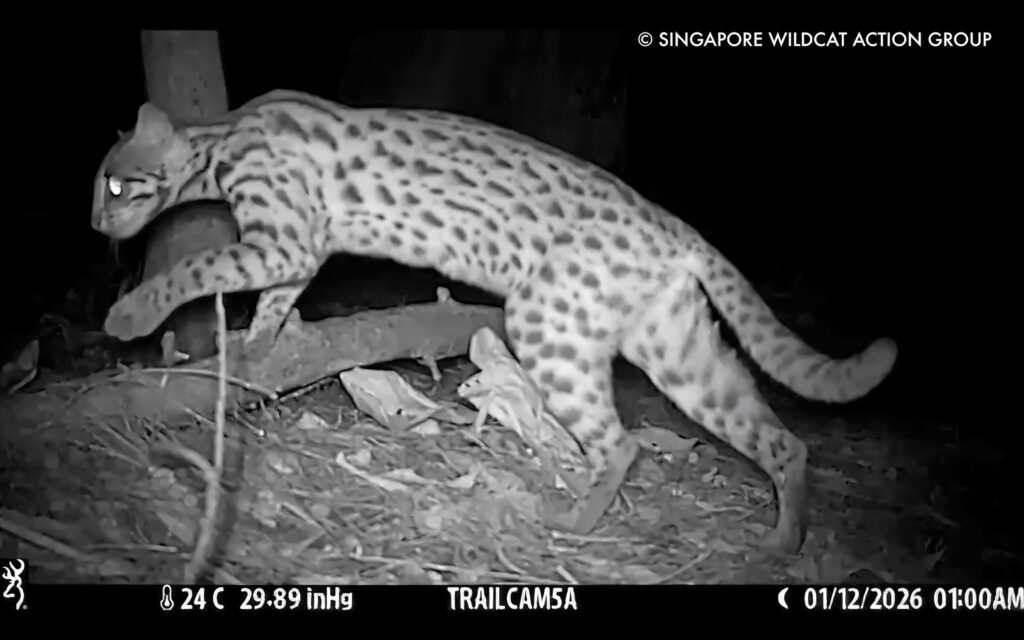
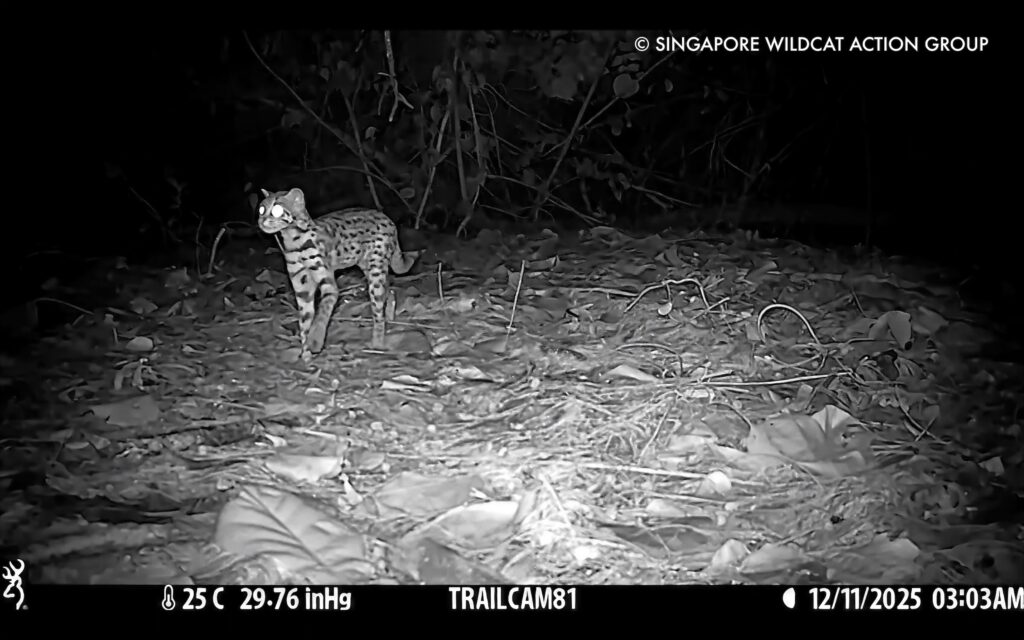
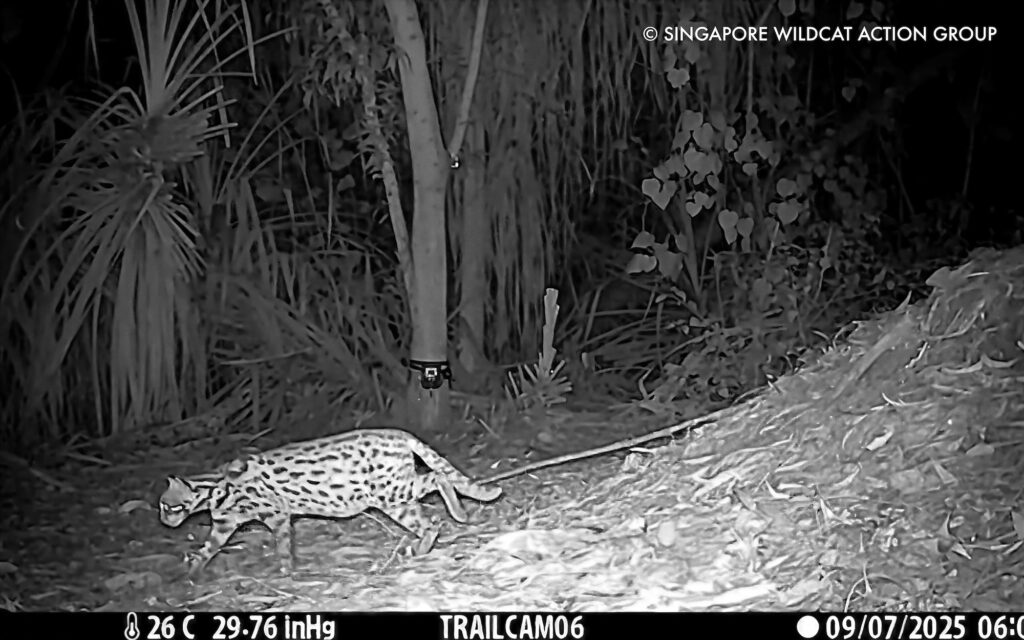
This forest area in Changi is quite degraded ecologically. What did it look like?
Some parts are near the road, so you can see human activity [on the road]. You can also see the rubbish like beer cans. In some videos we saw feral cats. Not leopard cats, but domestic cats. So perhaps someone abandoned the cats there.
What did you enjoy most about the experience?
I like to go into the forest, so just going in and exploring, going through all the bushes and trees was really exciting for me, and of course learning new things like setting up a camera trap and actually seeing the footage, especially when there’s a leopard cat. Also meeting new people and learning new things. We all come together from different backgrounds and we are very passionate about saving these cats. Like the recent issue with Gillman forest, they are pushing out all the animals. Where will they go? It’s a very urgent matter.
Initially I thought, oh dear, do I need to know all the scientific names? Do I need to know about research? Or research data collection? We may not be a biologist or a zookeeper but we can contribute. And maybe we can contribute something that the person who is science trained cannot actually provide. Each of us is different, right?
What did you learn about leopard cats that’s really amazing or interesting?
Leopard cats are so similar to domestic cats. They are very small. I’ve seen videos of them hunting, where they have rats in their mouths. Where they are found is like so near the road and so near humans, yet you can’t see them. I think hardly anybody sees them except for the camera traps. How do they camouflage themselves? How do they manage to keep themselves so hidden? Yet they survive. They reproduce. So it’s amazing. They can hunt for food, they survive, they reproduce and even one of them—we named her Bulat—gave birth. We were near construction in Changi because they are building the airport. Despite the noise, despite the construction and the destruction, they survive. Wow.
Citizen science efforts pay off with real conservation outcomes
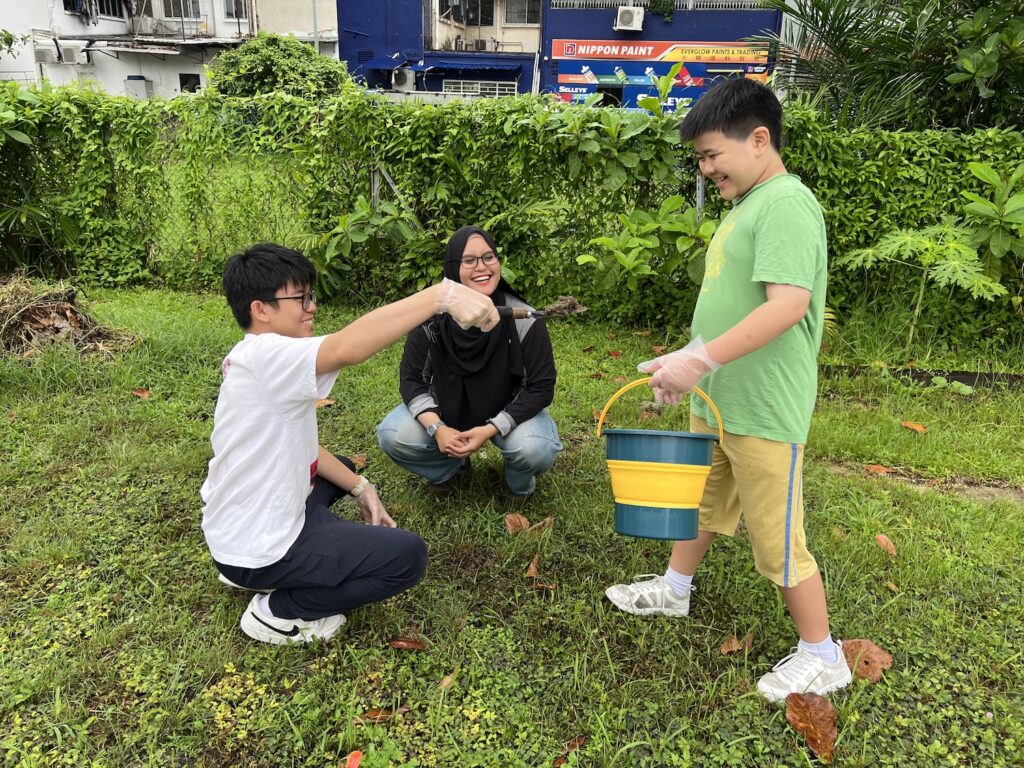
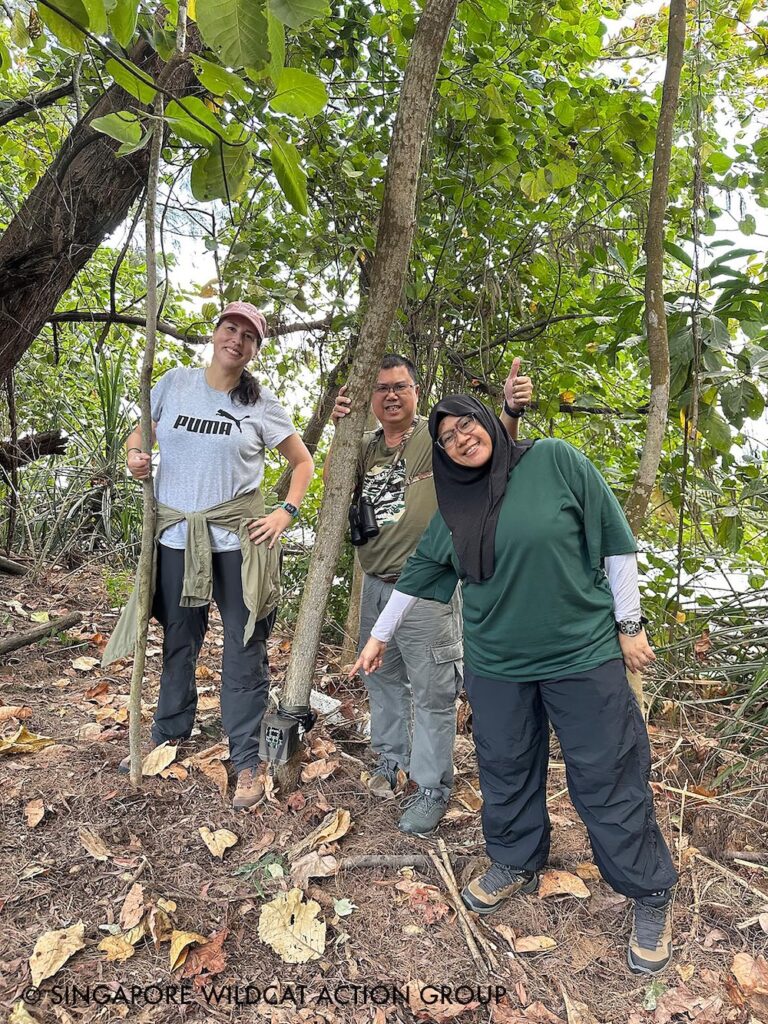
A total of 50 volunteers registered to participate in the Changi leopard cat study, with 30 actively going to Changi to check the cameras. Camera checks were done once a month, for the 18 cameras at the nine location sites. At each survey date, about six volunteers would go to two camera locations to check a total of four cameras. This involved removing the SD cards, checking battery life and cleaning the cameras before setting them up to capture more images.
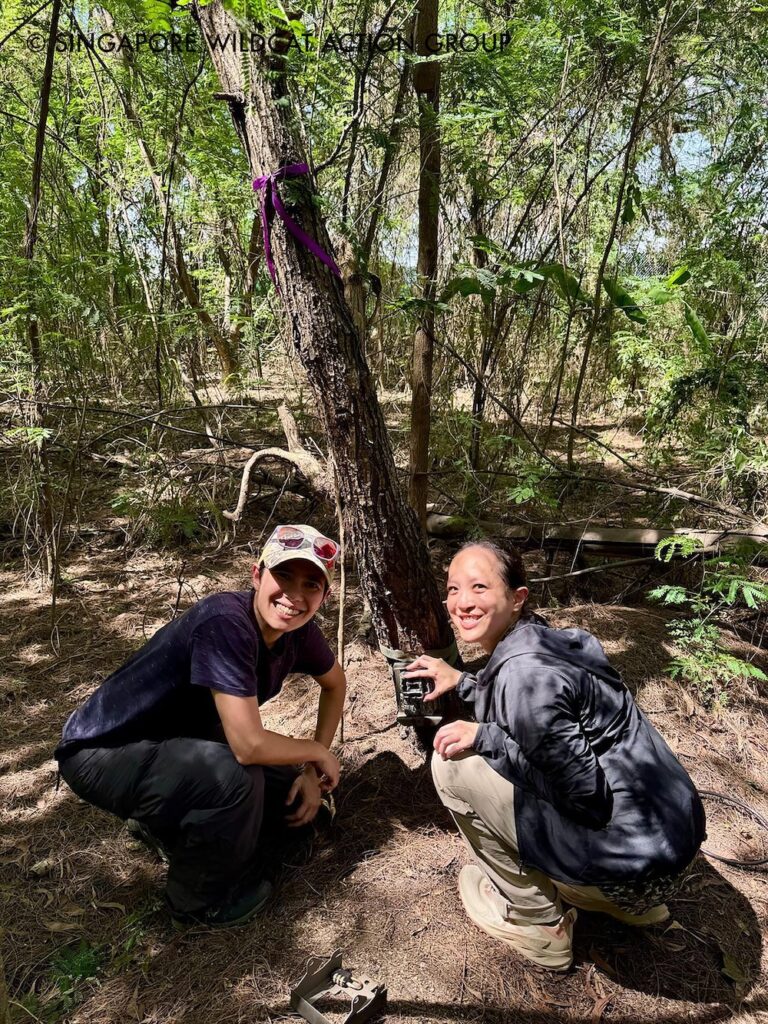
Through the efforts of these citizen science volunteers such as Asmawati, the fieldwork conducted along the Changi coastal stretch was able to confirm the presence of five leopard cats—two males, one female, and two juveniles.
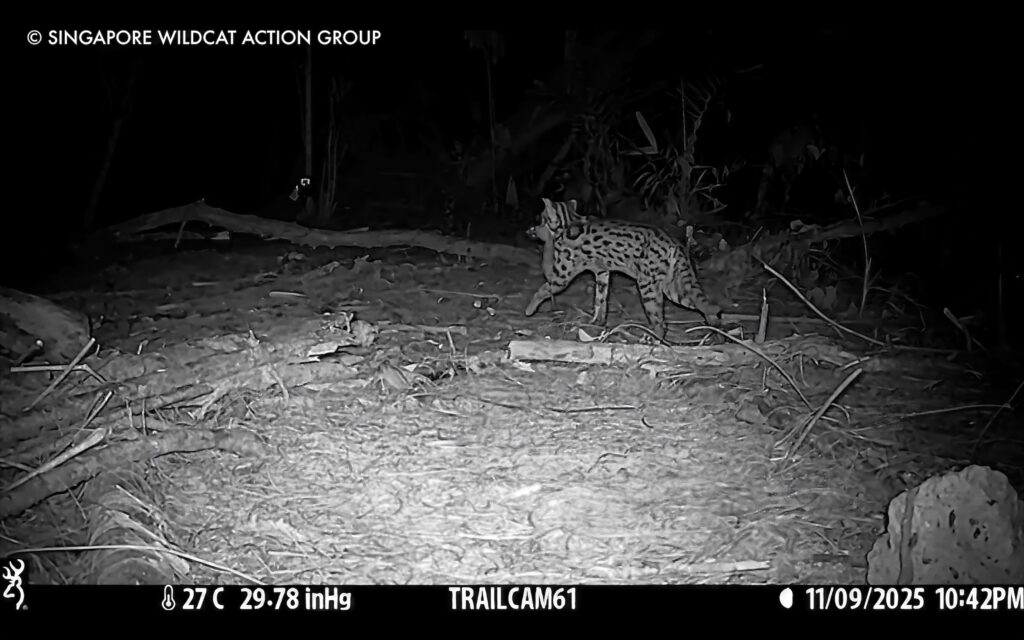
Due to the current and future development work in the Changi coastal area, the long-term survival of this group of leopard cats is of concern. NParks, in consultation with the Singapore Wildcat Action Group, therefore plans to relocate these leopard cats to safer habitats.
The survey findings from the fieldwork by the volunteer citizen scientists therefore were critical in shaping the conservation plans for these leopard cats, to relocate them to a more ecologically-suitable habitat. NParks plans to begin their relocation in the second half of 2026, to other parts of Singapore such as nature reserves.
Forested areas which are large and contiguous (rather than fragmented), would be able to provide for the leopard cats’ needs of shelter, forest cover and adequate prey.
Behind-the-scenes short film screening & panel discussion on the leopard cats of Changi Coast, Sat 29 Aug 2026
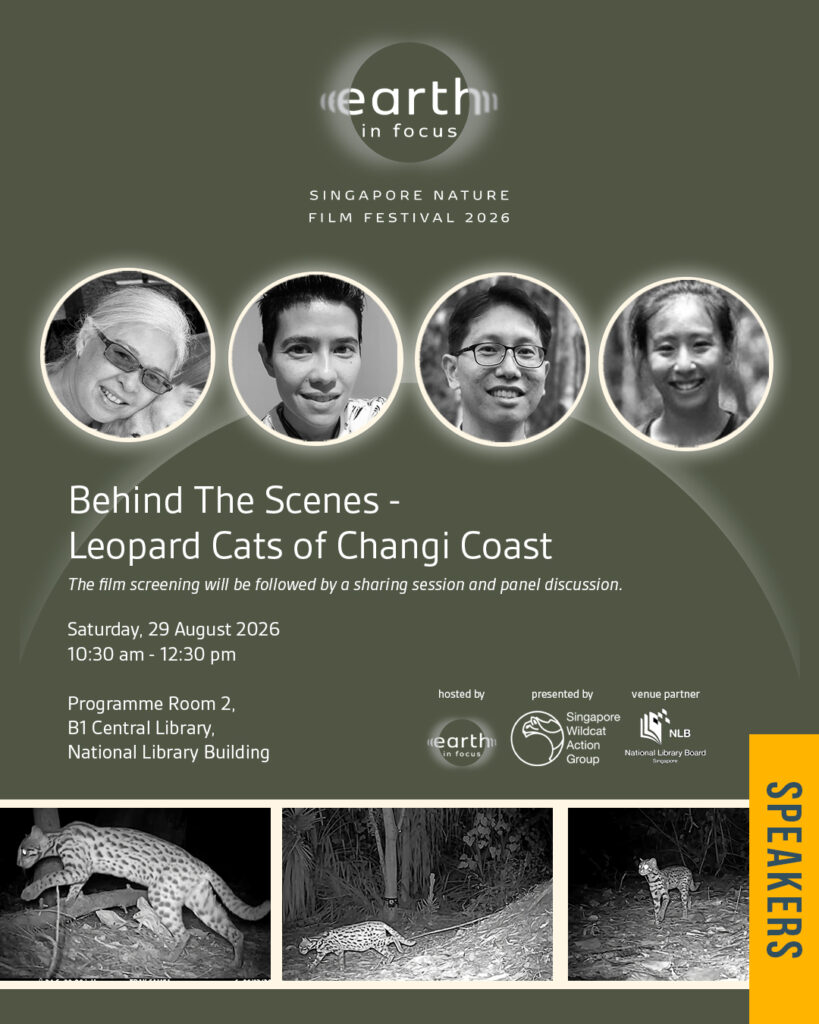
Join the Singapore Wildcat Action Group and the volunteers as they take you behind the scenes of documenting Singapore’s last wild cats. Through a short film and personal stories, discover how patience, teamwork and citizen science helped reveal the lives of these elusive animals, and why their stories are so vital for wildlife conservation in Singapore.
The screening and presentation will be followed by a panel discussion with the following speakers:
Dr. Vilma D’Rozario, Co-founder, Singapore Wildcat Action Group
Marie James, Volunteer, Singapore Wildcat Action Group
Dr. Norman Lim, Senior Lecturer, Nanyang Technological University
Sandra Chia, Senior Manager/Biodiversity (Terrestrial), NParks
Date: Sat, 29 Aug 2026
Time: 10.30am–12.30pm
Venue: Central Library, B1, Programme Room 2
If you can’t make it, watch the short film on Youtube.
To get involved with volunteer efforts with the Singapore Wildcat Action Group, connect with them on Instagram.
NParks’ advisory on public encounters with leopard cats
Members of the public who encounter a leopard cat are advised to keep a safe distance and avoid feeding, touching, chasing, cornering or approaching the leopard cat. Motorists should drive within speed limits and remain alert to animals crossing along roads flanked by forested areas, especially where animal-crossing signs are present.